Total Pageviews

Monday, November 26, 2012

H H DALAI LAMA INVITED FOR INAUGURATION OF LORD BUDDHA STATUE IN SIKKIM


A delegation of senior State Government officials led by Member of Parliament,Rajya Sabha,  Shri Hishey Lachungpa called on His Holiness the Dalai Lama at his official residence at McLeodganj, Dharamshala in Himachal Pradesh last week to invite his Holiness for the inauguration of the Tathagatha Preserve at Rabong in South Sikkim in March next year.

The delegation led by Shri Hishey Lachungpa to invite his Holiness on behalf of the state government and on the behest of Chief Minister Shri Pawan Chamling  comprised of Ecclesiastical Secretary Shri T. Gelek, Principal Chief Engineer-cum-Secretary, Public Health Engineering Shri T. B. Rajalim and Chief Engineer Buildings and Housing Department Shri C. Zangpo.

During the meeting, His Holiness has consented to visit the Tathagatha Preserve which comprises of the Lord Buddha Statue and Eco Garden, for the inauguration from 24 to 28 March 2013.
The newest pilgrimage and tourist attraction also called the Sakyamuni Project during its project construction phase had been given the new name of Tathagatha Preserve by his Holiness earlier. He has also visited the project site in the past and has also stayed and held teachings there.

The inauguration is slated for 25 March and his Holiness is also expected to hold a teaching at the Congregation Centre at the preserve. He will also visit Pemayangtse monastery during his four day visit to Sikkim.

The delegation of officials led by Shri Lachungpa also called on Chief Minister Shri Pawan Chamling at Mintokgang yesterday and apprised him of the acceptance of the invitation by His Holiness to come for the inauguration. 

Sunday, November 25, 2012


Bankers see no risk to small investors

November 24, 2012:

Bank deposits of Rs 38 lakh crore, accounting for 67 per cent of the total deposits, do not have cover from the Deposit Insurance and Credit Guarantee Corporation (DICGC) as of September 2011.

The figure was Rs 32 lakh crore a year ago. This is based on data from the Reserve Bank of India.

The falling insurance cover is due to the rising proportion of high-value deposits. Bank depositors enjoy insurance cover on deposits up to Rs 1 lakh. This means that if a bank goes belly up, each account will still recover up to Rs 1 lakh from the Corporation.

Some experts feel that the situation calls for a revision in the insurance cover offered. The insurance limit of Rs 1 lakh per account was set way back in 1993. With inflation averaging 6.5 per cent in the last two decades, a Rs 1 lakh deposit then would equal Rs 3.3 lakh at today’s prices.

SMALL INVESTORS

Bankers, however, counter that this may not pose much of a risk to small investors, as most are likely to have deposits of less than Rs 1 lakh. In fact, banks have deposit accounts (savings and time deposits) numbering 107 crore. Of these, 99.6 crore deposit accounts, or 93 per cent, have less than Rs 1 lakh as balance.

The DICGC’s deposit insurance fund, which is supposed to meet these liabilities, had a Rs 30,000-crore balance by March 2012. While it added Rs 5,300 crore by way of inflows for the year, it met demands of Rs 287 crore towards insurance claims. This fund’s balances amount to 1.6 per cent of the underlying deposits insured.

Regional Rural Banks have the highest proportion of insured deposits at 74 per cent followed by co-operative banks with 62 per cent of the deposit value insured. Commercial banks, on the other hand, have only 30 per cent of the deposit value insured.

SBI TOPS

State Bank of India and its associate banks have 35 per cent of their deposits insured (in terms of value) making it highest among the commercial banking group. Private banks and foreign banks, on the other hand, have 23 per cent and 8.4 per cent, respectively, of their deposits insured because of a larger proportion of high-value deposits on their books.

The average deposit per account as of September 2011 has risen to Rs 53,000 per account up from Rs 7,700 when the Corporation increased the limit to Rs 1 lakh in 1993.

Among individual accounts, while public sector banks’ depositors have around Rs 40,000 per account, private banks have deposit per account in excess of Rs 51,000. Foreign banks’ deposit per account is more than Rs 2 lakh.

Two-thirds of bank deposits have no insurance cover


Saturday, November 24, 2012

Sikkim Citizen Forum welcomes Foot Rally by Tibet Youth Club

GANGTOK, NOVEMBER 24: Sikkim Citizen Forum, a Gangtok based social
organization has welcomed the foot rally taken out by the Tibetan
Youth Club of Gangtok.
The Forum’s President ThuckChuk Lachungpa today said that the self
immolations by the Tibetan protesters in Tibet are disturbing and
alarming.
“The atrocities against Tibetans is the Human Rights Violation and we
strongly condemned the of the Chinese Government’ said Lachungpa
He said that there should be condemnations from all sections of the
society on such act.
The Sikkim Citizen Forum has also decided to distribute refreshments
at Labarbotey, near Kalimpong as a part of the solidarity towards the
Tibetan movement.


GANGTOK, 21 Nov: ( Sikkim Now)The Tibetan Youth Club [TYC] and the 5,000 plus strong Tibetan community living in and around Gangtok will be undertaking a peace march from Chandmari here in Gangtok to Salugara in Siliguri, West Bengal starting 23 November, informs Chung Chung Bhutia [president, TYC], while speaking to the media-persons here today.
“We will begin the peace march on 23 November from here in Gangtok and the five-day march will end on 27 November when we reach Salugara”, he added. Around 150 people from the Tibetan community [young and old] will be participating in the peace march.
“We are holding this peace march to protest against the atrocities being carried out against the Tibetan people in Tibet and also to express solidarity with the people who have self-immolated themselves for the Tibetan cause,” he said and added that the situation in Tibet was going from bad to worse. There is no freedom of religion or education and above all no freedom of speech for the Tibetans in Tibet, said Mr Bhutia and added that there is gross violation of human rights as well.
Speaking further on the peace rally, he informed that the rally will also be joined by Tibetans from Ravangla, Kalimpong, Darjeeling, Mirik and Kurseong. While the people from Ravangla will join the rally on 23 November, others will join along the way.
“We plan to cover around 20 to 25 kilometers in a day and will also be making halts during the nights. On the first day we will halt at the Water Garden at 32 Number, the second halt will be at Tarkhola, then at Rimbi, next at Sevoke before reaching Salugara,” he informed. He also stated that such peace rallies were also being organized in the other North East states.
He has further appealed to the people of Sikkim to come forward and support the peace rally and has also asked them to join them in the rally. This is the first time such a peace rally by the Tibetan community is being organized in the state, he added.
“During our march, we will be addressing the people we meet in the different towns and villages we cross in the way and also hand out pamphlets regarding our issues,” he stated. Then on 28 November, we plan to take out a mass procession from Salugara to the SDM’s office situated at Court More in Siliguri.
As on date [till November], a total of 78 people have self immolated themselves since 2009, 17 having set themselves on fire this November alone. In India there have been three deaths and four attempted self immolations till now.

----------------------------------------------------------------------------------------------------------------------------

Peace won't come through mere UN resolutions: Dalai Lama

Varkala (Ker),Nov 24 (PTI) Tibetan spiritual leader Dalai Lama today asked the humanity to make the 21st century an era of peace but said peace would not fall from sky or by "nice resolutions" at the United Nations. Addressing the 'Message Proclamation of the 80th annual pilgrimage of the Sree Narayana Mutt' at Sivagiri here, the Dalai Lama said peace would not come just by resolutions passed by the United Nations but through compassion and understanding of the views and concerns of other individuals. "The new era has just begun and 88 years are more to come. So, here is an opportunity for us to to make the century a peaceful one, the Nobel Peace Laureate said. However, he said peace will not come just by the United Nations passing resolutions or will fall from the sky. One should overcome anger and hatred. "Actually, anger and hatred come on the basis of fear," he said. Whether between community, individuals or nations, trust can be built only through compassion, he said, adding, exploiting and bullying others should be avoided. Spiritual leaders said though 20th century saw development in the field of technology and science, it was an era of violence and bloodshed. Technology and science also brought destruction and fear, he said. Quoting historians, the Dalai Lama said 200 million people were killed in the last century in violence, war and civil wars. Even nuclear weapons were used against human life."It is terrible," he said. "The 20th century can be described as the century of violence and bloodshed. Even nuclear weapons were used against human beings. So, we have to make efforts to make this century a period of peace. There is an opportunity to make this century a peaceful one," he said. "The United Nations's nice resolutions will not bring peace. Compassion is the alternative source of happiness and universal religion', he said. The Dalai Lama said the 21st century is also a century of development especially in the field of technology but technology would not bring peace. He also denounced corruption growing in many parts of the world including India and said "corruption is also one form of violence." He said India's tradition of 'ahimsa' (non-violence) and secularism were very much relevant in the present-day world. Relationship between individuals and nations should be made only on the basis of trust, he added. PTI 


China unveils its new leaders: Signals that continuity is more pivotal than change


Ajai Shukla
Business Standard, 16th Nov 12

At the end of the week-long 18th National Congress of the Chinese Communist Party, Xi Jinping --- probably China’s president and Party head for the next ten years --- led seven men onto the crimson dais of the Great Hall of the People. This chosen group will comprise the Politburo Standing Committee (PSC), the pinnacle of political power in the People’s Republic of China.

Xi’s elevation to party chief was on the cards, but a surprise development was his immediate appointment as head of the Central Military Commission, which oversees the influential People’s Liberation Army (PLA). Outgoing party chief, Hu Jintao, had been expected to continue as CMC head for two more years before handing over to Xi. Now Xi, who will oversee China’s security, will not have to look over his shoulder.

Behind Xi was Li Keqiang, who is expected to succeed Wen Jiabao as premier early next year. Li is from the “populist” political grouping, dubbed the “tuanpai”, which traditionally upholds the interests of farmers, migrant workers and the urban poor. Xi belongs to the “elitist” grouping, dominated by so-called princelings (descendents of powerful party elites), with careers in economic management rather than the rural areas that the “tuanpai” focus on. The PSC has traditionally featured members of both groups, under the slogan “one party, two coalitions.”

Following Li, in third place, was Zhang Dejiang, the party fire fighter who was sent to Chongqing to clean up after the spectacular downfall of Bo Xilai, and his wife’s arrest and sentencing for murder. As the third-ranked leader, Zhang will chair the National People’s Congress, China’s nominal parliament.

Addressing the delegates, Xi identified intra-party corruption and “bureaucratism” as “severe challenges” for the Party. “We must make every effort to solve these problems. The whole Party must stay on full alert,” said Xi.

But the PSC’s composition did little to suggest that reform was in the offing. The party’s two most prominent reformers --- Li Yuanchao and Wang Yang --- who were watched closely as bellwethers of party intentions, have been left out of the PSC.

A surprise big winner in the behind-the-scenes jostling for control of power is former President Jiang Zemin, now 86, who was critically ill last year and written off by many as a seriously power player. Four of Jiang’s protégés --- Zhang Dejiang; Yu Zhengsheng; Wang Qishan, and Zhang Gaoli --- have made it to the PSC, leaving him with greater power over China’s future direction than outgoing chairman, Hu Jintao.

But Jiang’s protégés might remain in a majority only for the next five years. In the 2017, five of the PSC members, including all four Jiang protégés, would reach retirement age. In contrast, both Hu’s allies seem set to continue after 2017.

Jiang, an unapologetic economic reformer who had brought China into the World Trade Organisation and built a strong economic relationship with the west, has apparently criticized the current fourth generation of leaders --- Hu and Wen --- for backtracking on economic reform and, thereby, slowing China’s growth.

Thursday, November 22, 2012

Chinese diplomats visit Sikkim to expedite release of Chinese national in custody here


GANGTOK, 21 Nov ( Source:Sikkim Now) Three Chinese diplomats were in Gangtok recently to expedite the release of fellow Chinese citizen languishing in the State Jail at Rongyek here. It is now learnt, and verified, that the sole purpose of their visit was to arrange for the release of the trader from Tibetan Autonomous Region taken into custody at Sherathang trade mart and now facing trial on espionage charges in Sikkim. The matter is now in the Courts. Media reports coming out of New Delhi had suggested that the diplomatic delegation was in Sikkim to reaffirm China’s acceptance of Sikkim’s status as an Indian state. This was obviously not why the delegation was here.
During their daylong visit to Gangtok on 19 November, the diplomats visited the state jail and met with Langki Jiancen, the 20-year-old who is in custody under the Official Secrets Act for having allegedly taken photographs of restricted areas at the border while travelling in these parts as a trader engaged in border trade.
In fact, what prompted the diplomats, who had arrived from the Chinese Embassy in New Delhi, was the report suggesting that Mr. Jiancen had opted not to be pushed back to China. When produced before the courts at Gangtok in late October he had been further remanded to judicial custody for a period of 2 months.
Interestingly, the accused had reportedly made known that he was not in favour of being deported or pushed back into China.
The refusal to be pushed back, as reported, must probably stem from the unpleasant prospect of being grilled for days on end by Chinese authorities on the other side once he is pushed back into Tibet. While the court is yet to give its final order it is being speculated that the plan of the Chinese national is to be ‘handed over’ to one of the Tibetan associations in the state for ‘deportation’ via Rangpo and eventually end up in Dharamsala.
The Chinese delegation from the Embassy are required to check in on their citizens caught in situations as Mr. Jiancen finds himself in, assure his return and more importantly report back to Beijing on the status as well as the efforts put in by them to secure their citizen. The three-member delegation included Minister Counsellor Fan Fei; Second Secretary, Hao Jian and Second Secretary, Jian Zhen.

Wednesday, November 21, 2012


Trade through Nathu La to close on 29th NOV for this season


The Indo China Border Trade via Nathula is scheduled to close on 30th November, 2012 as per the Office Memorandum no. 4/12/2003-Infra(ii) dated 30/3/2007. However, for the current year 30th November, 2012 being a non trading, the approval has been obtained from State Government to close trade on 29th Nov. 2012 being a trading day.(Source DIC-East)

Tuesday, November 20, 2012


PIN numbers you should never ever use revealed!

Sydney, Sep 20 (ANI): People who choose their 4-digit pins from birth dates, a year in the 1900s, or an obvious numerical sequence, are more likely to make it easy for a thief to crack the password, a new research has said.
Researchers at the data analysis firm Data Genetics have found that the three most popular combinations, "1234," "1111," and "0000", account for close to 20 per cent of all four-digit passwords.
According to The Age, every four-digit combination that starts with "19" ranks above the 80th percentile in popularity.
Also quite common, in the US at least, are MM/DD combinations, those in which the first two digits are between "01" and "12" and the last two are between "01" and "31", the study said.
Therfore researchers say that choosing your birthday, your birth year, or a number that might be a lot of other people's birthday or birth year makes your password significantly easier to guess.
On the other end of the scale, the least popular combination, 8068, appears less than 0.001 per cent of the time, the paper said.
Rounding out the bottom five are "8093", "9629", "6835", and "7637", which are all nearly as rare, the study concluded. (ANI)

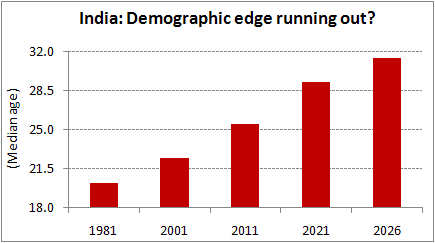
India: Demographic Advantage edging out soon ???

India has a lot of things going for it in its bid to be the economic power house. Its demographic advantage is certainly the most important of these advantages we believe. However, if report by a United Nations body is to be believed, this advantage would run out sooner than expected. As per the body, India's median age is projected to go up rapidly to 31.4 years by 2026, a huge jump from the 20.2 median age witnessed in 1981. Falling fertility rates and increased longevity are the key reasons being cited for this trend. If this is indeed true, then it is time policymakers start factoring demographics into their policymaking we believe.

Source: LiveMint 

Friday, November 16, 2012

National Press Day

PM's message on
The Prime Minister, Dr. Manmohan Singh has greeted the members of the Press on the occasion of National Press Day.

In a message, the Prime Minister said,

"A free and fair media has been an essential pillar of our democracy. Since our struggle for freedom, media has been guiding social change, informing readers of their rights and contributing to the nation-building process by spreading awareness.

As a country, we believe in complete independence of the media from external control. It is true that sometimes irresponsible journalism can have serious consequences for social harmony and public order, which the public authorities have an obligation to maintain, but censorship is no answer. It is for the members of the Fourth Estate themselves to collectively ensure that objectivity is promoted and sensationalism is curbed. It is for them to introspect how best they can serve our country and society and advance their well being." 

Thursday, November 15, 2012

According to Credit Suisse, the top one per cent of India’s population owns 16 per cent of its assets; the top 10 per cent owns more than half.

According to Credit Suisse, the top one per cent of India’s population owns 16 per cent of its assets; the top 10 per cent owns more than half.
Afghanistan President Hamid Karzai met with Congress Party President Sonia Gandhi during his visit to New Delhi. 


Manish Swarup/Associated Press
Afghanistan President Hamid Karzai met with Congress Party President Sonia Gandhi during his visit to New Delhi. 

Tuesday, November 13, 2012


Uttarakhand tops Planning Commission's green ranking


Uttarakhand has been rated top in the Plan Panel's green ranking based on quality of air and water, waste management, forest cover and climate change.

NEW DELHI: Uttarakhand has been rated top in the Planning Commission's green ranking based on quality of air and water, waste management, forest cover and climate change.

The panel lists Himachal Pradesh, Chandigarh, Sikkim and Andhra Pradesh as the other top four states on its Environmental Performance Index, which will serve as a measure of a state's green initiative and be linked to financial assistance from the Centre.

The index was prepared after the government in 2010 decided to rework the Gadgil-Mukherjee formula for determining central assistance to states to include an environmental parameter.

Environment performance will account for 2% of a state's overall performance. The measure is meant to be both an incentive and compensation to states for green initiatives. For allocating funds tied to environmental performance, the government has two options. The first is to devolve 2% of the gross budgetary support on the basis of the performance index. The second is to allocate funds by giving an additional weightage of 2% to the performance criteria of the Gadgil formula.

The index, which gives equal weightage to each of the five parameters for environmental performance, lists Mizoram, Kerala, Goa, Sikkim, Tripura and Puducherry as the best performing states with regard to air quality.

A state's performance on air quality is based on its deviation from target amounts of nitrogen oxides (NOx), sulphur oxides (SOx) and respirable suspended particulate material (RSPM) in the atmosphere.

Performance on water is based on waste management and sewage disposal, water quality determined as the biochemical oxygen demand in local rivers, and the coliform count.

According to the panel, Himachal Pradesh is the only state to have set up 100% capacity in sewage treatment. The performance of the other states in this regard ranges from no effort to about 20%. Not only is the performance on sewage disposal dismal, the total fecal coliform is as high as 92%. The states that show a semblance of having adhered to the prescribed river-water quality are Himachal Pradesh, Goa, Maharashtra, Andhra Pradesh and Puducherry. Delhi, Rajasthan, Punjab, Diu and Daman, and Puducherry extract more water than they recharge, according to the index.

Chhattisgarh outperforms all states in waste management. It collects 98% of the municipal solid waste, treats 100% of the biomedical waste and has capacity to dispose 89% of hazardous waste.

In keeping with India's efforts to counter climate change, increase in forest cover is considered as in input. Chandigarh, Sikkim

Monday, November 12, 2012

C M GREETINGS ON DEWALI


The Chief Minister of Sikkim Shri Pawan Chamling and Smt Tika Maya Chamling has extended their warm greetings and good wishes to the people of Sikkim on the auspicious occasion of Diwali.
The Chief Minister in his message to the people of Sikkim has said that the festival of light may not only light the houses of the people but even ignite the minds of the people towards positive thoughts, words and deeds. The Chief Minister has further wished that the blessings of Goddess Laxmi be bestowed upon every household and bring good health, peace, prosperity and happiness to every individual of the society.

Sunday, November 11, 2012

India needs 4 m civil engineers & 4 lacs Architect-Survey

A survey by the Royal Institution of Chartered Surveyors estimates that in 2010 India had just over 500,000 civil engineers when it needed nearly 4 m, and 45,000 architects when it needed over 4 lakh. It predicts that by 2020 the cumulative shortfall of core professionsl involved in the building trade could be in the tens of millions. This data was recently published by Economist. As seen in the chart, Indians lag their BRIC peers by a huge margin when it comes to enrolments for secondary and tertiary education. The national literacy rate is up from 52% in 1991 to 74%, according to the 2011 census. But gains beyond that are coming far too slowly. 

Data source: Economist

Tuesday, November 6, 2012


Large Cardamom is coming back to its bright days again in Sikkim

NOVEMBER 2012: After a decade long gloomy spell, the bright days are back for Sikkim's Large Cardamom. The state, considered as Large Cardamom epicenter of the world, is expecting high growth in auction sales of this aromatic spice in 2012-13.

"The glory is coming back after decade long low yield, low quality and low price spell. We expect over 100% growth in sales this year over last year figures. We had a sale of 4 Metric Ton(MT) in 2010-11, the first year of organized sales of large cardamom through open auction. That went up to 16MT in 11-12. This year, this is expected to be around 40 Metric ton. Against Rs 1100/kg average price of last two years, it is expected to reach Rs 1300/kg. Beginning by mid November, the fortnightly auctions will be conducted till June 2012," said Mr P C Roy senior zonal manager Eastern Regional Agricultural Marketing Cooperation (NERAMAC), an agency under administrative control of GoI's Department of North East Region. NERAMAC operates the only Large Cardamom auction center of India at Rangpo in Sikkim.

Beside 6 available wild varieties, Amomum subulatumis the main traditionally cultured species in Sikkim, the epicenter of India's Large Cardamom arena that produces around 80% of national annual yield. Remaining 20% comes from Darjeeling hills and North East Region. India is the world leader by producing over 50% of global yield.

Beside consuming 1500 to 1800 MT, India is an important exporter of this cash crop mainly to Pakistan, Singapore or Middle East where Sikkim's large Cardamom is the preferred choice due to its distinctive aroma and colour.

But, unorganized import of so called 'high yield' varieties from Bhutan to replace traditionally cultivated varieties at the beginning of last decade imported a wide spread viral disease that had put the cash crop under deep uncertainty for long. Government attention came only after the yield touched rock bottom.

Though the scenario has started changing, lion's share of Sikkim's total yield of around 3200MT is still produced and sold without organized monitoring keeping the risk of similar chaos again alive. Accepting this Mr Roy said, "We are confident to have an entire different view of the picture by next couple of years."

Sunday, November 4, 2012

‘Separate-nation demand in Northeast likely by 2018’


source:Indian Express
By Pranav Kulkarni Nov 3, 2012
  

In another six years, there could emerge a demand for a separate nation in the Northeast, said Lt Gen (retired) D B Shekatkar at a defence seminar in the city on Thursday.

“India’s eastern and northeastern regions have been subjected to demographic changes as part of a well thought-off plan by some of our neighbours. This is creating undue pressure on the economy, culture and ethnic balance and is bound to have long-term adverse repercussions on internal security, and economic dimensions. In all likelihood, by 2018, there could be a demand for a separate nation in the northeast,” he said addressing a seminar on Defence Preparedness of India viz a viz China and its impact on Asia.

The two-day seminar had many serving and retired officers of the three Armed Services speaking on the subject. The seminar, conceptualised by India Development Council (IDC) to commemorate 50 years of the India-China war of 1962, began with felicitation of Colonel (retired) Tallury Krishnamohan, Lt Gen (retired) V M Patil and some others who took part in the 1962 war.

An exhibition of photographs of the Sino-Indian conflict was unveiled by Lt Gen V A Bhat, Director-General of Quality Assurance (DGQA).

Shekatkar, national convener, IDC, stressed focus on indegenisation. Speaking on the challenges in India’s integrated national security, Shekatkar listed northeastern insurgency, proliferation of nuclear technology in the hands of non-state actors, Naxalism as some major internal threats to India.

“There are 31 terrorist outfits across the globe, all of which are located within a radius of 1,000 nautical miles from India,” he said.

Shekatkar added that Maoists have already gained a foothold in 12 states. “If immediate steps are not taken, we will be faced with a situation demanding intervention and control by the Indian Army. It is reasonable to assume that Naxalites already have links with Northeast insurgents, and ISI agents in Nepal and Bangladesh.”

Air Marshal (retired) Bhushan Gokhale, former Vice Chief of Air Staff, in his lecture focusing on role of the Indian Air Force (IAF) in 1962 listed lack of intelligence assessment as one of the failures of 1962 operations. “Canberra aircraft were potent weapons, and could have been used effectively (in the 1962 operations),” he said.

Gokhale threw light on the istory of the Indian Air Force and its role in ‘taking the war into the enemy territory’.

He showed videos and photographs of air-to-air refuelling, Airborne Warning and Control System (AWACS), Unmanned Aerial Vehicles (UAV) to demonstrate IAF capabilities. He also mentioned precision-strike capabilities of the IAF such as by une of Laser Guided Bombs (LGB), used in the Tiger Hill operations.

Friday, November 2, 2012

List Of Famous Failures!.Be + Positive! | Ayan Nayak


When you feel a little discouraged, just remember what these people accomplished when everyone else looked at them as failures. Believe in Yourself!Einstein was 4 years old before he could speak. Isaac Newton did poorly in grade school and was considered unpromising. When Thomas Edison was a youngster, his teacher told him he was too stupid to learn anything. He was counseled to go into a field where he might succeed by virtue of his pleasant personality. F.W. Woolworth got a job in a dry goods store when he was 21, but his boss would not permit him to wait on customers because he didn't have enough sense to close a sale. Michael Jordan was cut from his high school basketball team.Bob Cousy, a legendary Boston Celtic basketball player, suffered the same fate, but he too is a Hall of Famer.A newspaper editor fired Walt Disney because he lacked imagination and had no original ideas. Winston Churchill failed 6th grade and had to repeat it because he did not complete the tests that were required for promotion.Babe Ruth struck out 1,300 times, a major league record.A person may make mistakes, but is not a failure until he or she starts blaming someone else. We must believe in ourselves, and somewhere along the road of life we will meet someone who sees greatness in us and lets us know it.

Wednesday, October 31, 2012

CODES FOR DE-CONDITIONING THE MIND


CODES FOR DE-CONDITIONING THE MIND

By Swami Avdhutananda
 Ex Acharya, Chinmaya Mission-Sikkim

1)       HAVE THE COURAGE TO CHANGE WHAT YOU CAN, SERENITY TO ACCEPT WHAT YOU CANNOT CHANGE AND THE WISDOM TO KNOW THE DIFFERENCE. COMMON SENSE IN AN UNCOMMON DEGREE IS WISDOM. 


2)       MAKE THE EFFORT TO BEGIN TO ACCEPT OTHER PEOPLE FULLY AS THEY ARE. THE TRAGEDY IS THAT OUR OWN MIND IS NOT IN OUR CONTROL. AND WHAT IS THE COMEDY? OUR OWN MIND WHICH IS NOT IN OUR CONTROL, WITH THAT UNCONTROLLED MIND WE WANT TO CONTROL OTHER PEOPLE’S MIND WHICH IS NOT EVEN IN THEIR CONTROL—AN IMPOSSIBLE TASK!!! THIS IS THE COMEDY! 


3)       ACCEPT YOURSELF.  IT IS OUR INABILITY TO ACCEPT OURSELVES FULLY, WITH ALL OUR WEAKNESSES AND SHORTCOMINGS THAT CAUSES SO MUCH ANGUISH IN OUR LIVES.  LAUGH AT YOURSELF, AT YOUR BEHAVIOUR AND AT YOUR ANTICS.  DON’T TAKE YOURSELF TOO SERIOUSLY. NO ONE ELSE DOES!! 


4)       DON’T COMPARE YOURSELF WITH ANYONE. YOU HAVE NO IDEA WHAT THEIR JOURNEY IS ALL ABOUT. DON’T LET YOUR NEIGHBOURS SET YOUR STANDARDS. BE YOURSELF. DON’T IMITATE OTHERS. INSTEAD OF BEING A POOR IMITATION, BE 100% ORIGINAL.


5)       DO NOT BLAME OTHERS FOR YOUR SORROWS AND PROBLEMS.


6)       TRY TO PUT YOURSELF IN OTHER PEOPLE’S SHOES.


7)       TRY TO BE MORE OPEN WITH PEOPLE.


8)       DO NOT WORRY ABOUT WHAT OTHERS WILL THINK. THEY DON’T DO IT (THINK) VERY OFTEN ANYWAY! THE SO CALLED ‘OTHERS’ ARE EQUALLY WORRIED ABOUT WHAT ‘OTHERS’ WILL THINK!! WHAT OTHER PEOPLE THINK OF US IS NONE OF OUR BUSINESS. YOU CAN’T PLEASE EVERYBODY. DON’T LET CRITICISM WORRY YOU.

9)       WATCH YOUR HABITUAL REACTIONS TO THE PEOPLE AROUND YOU AND TO YOUR ENVIRONMENT.  TRY TO REDUCE BEING DEPENDENT ON ANY PARTICULAR PLACE, TIME, OBJECT, PEOPLE, RELATIONSHIP, ENVIRONMENT, CONDITION, SITUATION AND CIRCUMSTANCE FOR HAPPINESS. ANY KIND OF DEPENDENCY IS A CAUSE FOR BONDAGE AND ANY KIND OF BONDAGE IS A CAUSE FOR MISERY. NO ONE IS IN CHARGE OF YOUR HAPPINESS EXCEPT YOU. NOBODY REALLY CARES IF YOU ARE MISERABLE.  SO YOU MIGHT AS WELL BE HAPPY.

10)   DO NOT INTERFERE IN OTHERS’ AFFAIRS UNLESS ASKED TO DO SO.

11)   WHAT IS GIVEN TO YOU WILL BE TAKEN AWAY. IT INCLUDES THE INSTRUMENTS CALLED THE BODY, MIND AND INTELLECT THROUGH WHICH YOU FUNCTION IN THIS WORLD.  SO DO NOT HOLD ON TO THINGS THAT DO NOT BELONG TO YOU.

12)   INTROSPECT REGULARLY.  ANALYSE YOUR NEEDS, ATTACHMENTS, DESIRES, HABITS, HANG-UPS, WEAKNESSES AND SHORTCOMINGS.  IT HELPS IN OVERCOMING THESE.  VIEW THE WHOLE WORLD AND EVERY THING AND BEING IN IT AS YOUR TEACHER.


13)   REMEMBER THAT EVERYONE HAS THE POTENTIAL TO ATTAIN HIGHER LEVELS OF AWARENESS. TRY TO SEE THIS POTENTIAL IN ALL THE PEOPLE, NO MATTER HOW DIFFICULT IT MAY BE.

14)   HAVE NO HATRED FOR ANY THING OR BEING, EVEN FOR A FRACTION OF A MOMENT—EVEN IN A DREAM. LIFE IS TOO SHORT TO WASTE TIME HATING ANYONE. SINCE HATE POISONS THE SOUL, DO NOT CHERISH HATRED. FORGIVE EVERYONE FOR EVERYTHING. ALWAYS FORGIVE YOUR ENEMIES—NOTHING ANNOYS THEM AS MUCH. LIKEWISE WE ALSO NEED TO APOLOGISE OR ASK FOR FORGIVENESS FROM THOSE WE MAY HAVE HURT KNOWINGLY OR UNKNOWINGLY. APOLOGISING DOES NOT MEAN THAT WE ARE WRONG AND THE OTHER ONE IS RIGHT. IT SIMPLY MEANS THAT WE VALUE THE RELATIONSHIP MUCH MORE THAN OUR EGO.
     
15)   DON’T AVOID DIFFICULT SITUATIONS. VERY FEW OF US ARE REALLY AWARE OF PROGRAMMING AND CONDITIONING OF THINGS AND BEINGS. WHEN WE RECOGNIZE IT THEN WE START TO DEAL WITH IT. HOWEVER GOOD OR BAD A SITUATION IS IT WILL CHANGE. DON’T SPEND TIME BROODING OVER SORROWS OR MISTAKES. DON’T BE ONE WHO NEVER GETS OVER THINGS. FRAME EVERY SO CALLED DISASTER WITH THESE WORDS “IN 5 YEARS WILL THIS MATTER?” TIME HEALS ALMOST EVERYTHING. GIVE TIME TIME.


16)   DON’T ALWAYS IDENTIFY YOURSELF COMPLETELY WITH YOUR MIND, BODY AND ACTIONS.  EVENTS HAPPEN, DEEDS ARE DONE, BUT THERE IS NO INDIVIDUAL DOER THEREOF.


17)   INSTEAD OF DOING WHAT YOU LIKE START LIKING WHAT YOU DO.


18)   UNHAPPINESS IS NOT KNOWING WHAT WE WANT AND KILLING OURSELVES TO GET IT. HAPPINESS IS A CONSCIOUS CHOICE, NOT AN AUTOMATIC RSPONSE. AVOID PEOPLE WHO MAKE YOU UNHAPPY. KEEP YOURSELF BUSY. A BUSY PERSON NEVER HAS TIME TO BE UNHAPPY. YOU SIMPLY CANNOT BE UNHAPPY UNLESS YOU HAVE DECIDED TO BE UNHAPPY. MAKE UP YOUR MIND TO BE HAPPY. LEARN TO FIND PLEASURE IN SIMPLE THINGS.


19)  LIVE IN THE NOW AND ENJOY THE PRESENT MOMENT. MAKE PEACE WITH YOUR PAST SO THAT IT DOESN’T MESS-UP THE PRESENT. YOU CANNOT CHANGE THE PAST, BUT YOU CAN RUIN THE PRESENT BY WORRYING ABOUT THE FUTURE. LIVING IN THE PRESENT MEANS CONSCIOUS ACTION NOT MECHANICAL MOVEMENT.

REMEMBER, YOU ARE TOO BLESSED TO BE STRESSED.

THERE IS NOT A SHRED OF EVIDENCE TO PROVE THAT LIFE IS SERIOUS.

WHEN SELF-KNOWLEDGE MATURES, THEN THE ENTIRE CREATION IS NOTHING BUT AN ENCYCLOPEDIA OF JOKES!!

LIVE, LOVE AND LAUGH A LOT

LIFE IS A GIFT, UNWRAP IT.

Friday, October 26, 2012

BPL Card Holders to Get Subsidised Pulses through PDS

BPL Card Holders to Get Subsidised Pulses through PDS
• In view of mismatch between demand and supply of pulses and lower acreage under pulses in 2012-13, and delayed monsoon the Government has decided to provide Rs. 20/-as subsidy on the import of pulses to state Governments.

• Imported pulses will supplied at reasonable prices to the BPL population through PDS. Designated import agencies will directly enter into contract with the States/UTs for supply of imported pulses.

• Subsidy of Rs.20 per kilogram will be paid to designated importing agencies up to a maximum of the number of BPL card holders in a particular state.

• The proposed scheme will make available pulses, a critical protein requirement to the vulnerable sections of society, BPL card holder, at subsidized rates.

• State/UT Governments will monitor and ensure that the distribution strategy enables the subsidy benefit to reach the targeted population.

• This scheme will be in operation till 31.03.2013 and a decision regarding its continuation will be taken early next year.

Letter from India: the welcoming lights of Gangtok

A long drive from plains to mountain peaks reveals a jewel hidden in the Himalayas
Gangtok Buddhist monastery
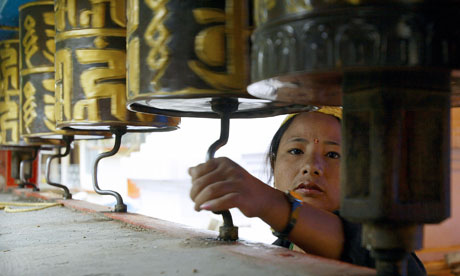
Tranquil retreat ... an Indian Buddhist woman rotates the prayer wheels at a monastery in Gangtok. Photograph: Deshakalyan Chowdhury/AFP/Getty
 
The road winds tortuously up into the Shivaliks, leaving the Teesta river behind to wend its way through the plains. In the distance, the warm, welcoming lights of Gangtok shine through a soft autumnal haze; when the cold months arrive, a bed of snow will flake the twinkling fairy lights of this hill town.
We have crossed monasteries, temples and bridges lined with Buddhist prayer-flags on our way up, driving over rough Himalayan terrain in our journey to the mountains. Clear springs and hamlets pop out of what could be nowhere, but for the fact that even at 3,000 metres above sea level, the consumerist trappings of civilisation are kept alive through puffy bags of crisps and crates of soft drinks, sold alongside hot Darjeeling tea.
After hours of travel up narrow, twisting roads, we find ourselves in Gangtok, the capital of the state of Sikkim. Buildings crowd the slopes, and people stroll unhurriedly around, as if absorbing the tales of a past long gone but still lingering in spirit. It feels almost like a journey through time: Gangtok is quite different from the cities of the plains, but possibly like the quintessential colonial-era Himalayan towns. You can almost conjure up images of British sahibs and their elegantly dressed wives trotting up and down these hill roads on their horses, looking for respite from the searing heat of the plains. All you need, in fact, is a haunted dak bungalow to complete the story.
Today, the main thoroughfare, MG Road, is a paved street only for pedestrians. It is lined by restaurants and shops, ending in a nondescript, dank movie theatre. The lamp-posts are mounted with Bose loudspeakers playing Hindi movie songs from the early 90s. Something about the very air evokes nostalgia.
It is close to 8pm, and a cloudy mist descends heavily over the town, people reduced to blurry shapes. Shopkeepers begin to rustle up their wares; some already have their shutters down.
With its extraordinary mix of faiths and traditions, Gangtok defies slotting into any single category. It isn't ostentatious opulence that takes your breath away, but simplicity. Up in its quiet Himalayan corner, it lives a rich, happy life, with ready smiles that mask its troubles.
Source:Guardian