Total Pageviews

Thursday, May 3, 2012


 Oil's not well on South China Sea

Abhishek Shukla
Source: The Hindu

   
Boosting bilateral energy cooperation with Vietnam, the Philippines and other ASEAN countries will work to India's advantage.
China has once again warned companies looking to explore for hydrocarbons in the South China Sea (SCS) to stay away from the disputed waters. The South China Sea is believed to hold large reserves of undiscovered oil and gas.
The US Geological Survey pegs the discovered and undiscovered resources at 28 billion barrels of oil and 7.5 trillion cubic metres of gas in the offshore basins of the SCS — reason enough for the dragon to spew fire.

India in SCS cauldron

Despite the United Nations Convention on the Law of the Sea (UNCLOS, 1982) guidelines, ownership disputes continue to stir up the SCS waters. Among the nations flanking its shores, China, Vietnam and the Philippines are aggressively claiming sizeable portions of the sea.
China has been demanding almost the entire area and is rooting for bilateral talks to resolve the territorial disputes, arguably to use its size to influence the one-to-one dialogues.
Recently, Beijing raised objections to ONGC's presence in SCS. ONGC's overseas arm, ONGC Videsh (OVL) holds stakes in a producing gas field — Block 06.1 in the Nam Con Son basin off Vietnam's south coast — in a joint venture with TNK-BP and state explorer PetroVietnam.
In 2006, OVL won a contract to jointly explore, along with PetroVietnam, Blocks 127 and 128 in the Phu Khanh basin, Vietnam. It then signed a three-year deal with Petrovietnam in September 2011 to jointly explore for oil and gas in these blocks. OVL later relinquished Block 127 after it encountered dry wells.
The blocks in question — 127 and 128 — lie within the Vietnamese maritime border as per the UNCLOS guidelines and partially beyond the line of control claimed by China. However, China's claims are based on historical maps that find little support in international law.

energy ties with ASEAN

Not only is the South China Sea believed to possess substantial hydrocarbon reserves, but it is also a vital transit point for ships. Despite China's repeated warnings to nations for cessation of exploration in South China Sea, India has maintained its stand of respecting the freedom of international navigation through this key shipping route.
The region can be an important piece on the energy supply map for both India and China. It opens up the shipping route for bringing ONGC's Sakhalin oil to India's coast through the Strait of Malacca.
Vietnam, Indonesia and the Philippines are pushing for increasing exploratory drilling in their respective Exclusive Economic Zones (EEZs) and Indian companies, like other international players, should grab this opportunity with both hands.
First, this will add a hydrocarbon supply source that is closer to its own shores, cutting down on the transportation distance; second, India's relationship with the Association of South-East Asian Nations (ASEAN) will gain ground, apart from the ‘customary' regional cooperation status.

Diplomatic masterstroke

Notwithstanding China's rhetoric, India has reiterated its intention to partner with Vietnam in exploring for oil and gas in the disputed waters and expanding the decade-old cooperation with Vietnam on key sectors, including energy.
New Delhi has, so far, done well in dealing with the Chinese diplomacy on this issue. Moreover, India's commitment to partner Vietnam can be a dampener for China's intentions; China would have thought of using its size to dominate the bilateral negotiations with stakeholders for its claims of ‘indisputable sovereignty over the entire South China Sea' — a bid to seek regional hegemony.
To protect its interest in the South China Sea and in ASEAN, India needs to be both forceful and diplomatic. As of now, New Delhi's reply to Chinese bickering has been that India has faith in Vietnam's sovereign claims over the concerned blocks and ONGC's investment is purely commercial in nature, with no political connotation. As per the UNCLOS boundaries, India stands justified.
New Delhi, with due regard to its own stand on Kashmir, should not put its foot in its mouth by giving opinions on territorial debates. It also has to deal with the tempestuous task of settling its own border dispute with Beijing. Hence, concerted efforts to increase bilateral energy cooperation with Vietnam, the Philippines and other ASEAN countries may prove to be a diplomatic masterstroke, as it will check China's high-handedness in the region and establish India's commercial interest without political spite.

All about energy security

Conventional wisdom says having more friends always helps. Both India and China would be reluctant to get into a debate that threatens the stability of the region. Moreover, the South China Sea is not the only thread in Sino-Indo ties.
In today's globally interdependent world, India and China need each other in more ways than one. Military engagement will bring no material gains to either side. China seems to understand this, considering its reluctance so far to use its military might in thwarting oil exploration efforts in the SCS.
Igniting a dispute that leads to a full-fledged military engagement — which unites the ASEAN against Beijing, stops all exploration activities and provides the US a reason to intervene — will surely be unpalatable for Beijing.
India, like China, is on the cusp of a demographic and economic makeover, and in need of increasing energy supplies to fuel economic development. Both the countries are keen on securing energy supplies from across the globe, with energy import bills damaging their balance of trade. The South China Sea is one such region that holds promise. It will be foolhardy to let the opportunity pass, while global majors flock to exploit the region despite the sovereignty disputes.
The presence of energy majors such as ExxonMobil and BP in the SCS substantiates the promise that the region holds. Hence, it is in the best interest of both countries and the other littoral states to let the region be explored and its potential be assessed through material developments.
Internal strife could lead to waning international interest and lesser involvement of global energy majors, who bring with them invaluable expertise and world-class technology.
Indian policymakers will do well to stick their neck out for protecting India's interest in the SCS, without jeopardising the peace of the region by taking a radical diplomatic stand at ASEAN.
The debate on the territorial sovereignty is not new, and many companies continue to explore in the region without much problem. Fittingly, as the energy industry believes, challenges and opportunities go hand-in-hand.
(The author is with Energy and Chemical Practice of Evalueserve. The views are personal) 

RECRUITMENT RALLY
A recruitment rally is being organised for the Male citizens of Sikkim.
Date and Venue of Rally
1.       20th – 21st May 2012 – Palzor Stadium, Gangtok
2.       22nd May 2012 – Kyongsa Ground, Geyzing
Pre Recruitment Training
1.       13-19 May 2012 – Palzor Stadium, Gangtok
2.       14-20 May 2012 – Kyongsa Ground, Geyzing
The registration for the rally would commence from 05.00 hours at respective locations during each day of the conduct of rally.
………………………………………
The Indo-Tibetan Border Police is undertaking recruitment of Meritorious Sportspersons (Male and Female) for filling up 418 vacancies in the post of constables /GD against sports-quota in ITB Police on All India basis. The recruitment will be conducted at 13th Bn ITB Police, Village Sama Sevic, Lingdum Busty, P.o. Dhajey, Gangtok w.e.f. 07.05.2012 to 11.05.2012.
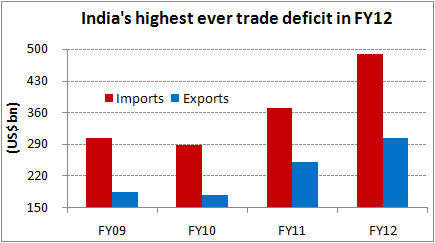
While our imports have exceeded imports most of the time, the difference in FY12 has come as high as US$ 185 bn. Combine this with weak capital inflows and one gets an idea on why rupee seems to be under immense pressure. Unless petro prices cool off, we do not think a big respite is in the offing any time soon. Of course, imports of precious metals such as gold have also caused the problem to exacerbate a bit.


Source: Business Standard 

 Intra-bank Deposit Accounts Portability

DBOD.AML. BC. No. 97/14.01.001/2011-12
April 27, 2012

The Chairmen/Chief Executive Officers,
All Scheduled Commercial Banks (excluding RRBs)/Local Area Banks

Dear Sir,

Intra-bank Deposit Accounts Portability

It has been brought to our notice that some banks are insisting on opening of fresh accounts by customers when customers approach them for transferring their account from one branch of the bank to another branch of the same bank. Such insistence on opening of fresh account or making the customer undergo full KYC process again causes inconvenience to them resulting in poor customer service. It is not reasonable in view of the fact that most bank branches are now on CBS and KYC records of a particular customer can be accessed by any branch of the bank.

2. Banks are advised that KYC once done by one branch of the bank should be valid for transfer of the account within the bank as long as full KYC has been done for the concerned account. The customer should be allowed to transfer his account from one branch to another branch without restrictions. In order to comply with KYC requirements of correct address of the person, fresh address proof may be obtained from him/her upon such transfer by the transferee branch. It may be noted that instructions regarding periodical updation of KYC data in terms of para 2.4(e) and those on maintenance of records of identity and transaction in terms of para 2.21(iii) of our Master circular DBOD.AML.BC. No.2/14.01.001/ 2009-10 dated July 01, 2011 remain unchanged and banks will be required to carry out the updation at prescribed intervals as also maintain records of transactions and verification of identity as prescribed.

3. Please acknowledge receipt.

Yours faithfully,
(Sudha Damodar)
Chief General Manager


Fund Convenience Store

  • Source: Valueresearch.
V Ramesh, Deputy Chief Executive, AMFI, presents us with a very practical scenario. “Let’s take a town called Dindigul in South India. Now assume that no AMC has an office there and neither an R&T presence. If that be the case, one has to send the transactions by post or courier to the nearest town.”
The solution? AMFI’s new online platform, MF Utility. “This being on the internet, the investor will be able to simply log in and transact,” says Ramesh. Though an investor with internet connectivity does have online options available today, MF Utility promises a lot more.
It has a simple and focussed function – to be an order-routing application platform. There will be no processing done here. The orders will come in through various channels and this will be a collection zone where all the transactions will be collated and channelized to the R&T agents.
So all players – AMCs, distributors and investors can input their orders here. This system will aggregate all orders – online and offline, before it electronically transfers it to the R&T agent, as an aggregated transaction file, for processing. This is possible simply because all fund houses and distributors will be connected to the platform. It definitely is much more efficient and scalable than the current process.
Will this affect the current players in terms of business? Not at all.
The existing infrastructure is not substituted as the workflow continues to be the same for those in the trade. The R&T agents will continue to process purchases, redemptions, switches, dividend payments and all other such transactions.
Distributors will still play a very important role in advisory, something that this platform will not provide. Being an industry body, the platform will be neutral and not favour any single AMC. While fund related information in terms of offer documents and fact sheets will be provided, there will be no advisory in terms of performance rating, fund analysis, recommendations or comparisons.


The distributor will be able to extend his window to accept transactions. Today, since he has to submit the clients’ transaction by 3pm at a particular location, the internal cut off time is much earlier, depending on how far he is from the nearest transaction point. With MFU, since he can directly enter the transaction, he can probably accept the transactions in his office till much later.
The distributor will also be able to see snapshots of his clients’ portfolios and asset allocation for the transactions that have come through him. There will also be various MIS available to him, which will help him view his business, and accordingly strategise.
Going forward, no distributor needs to create a full online module to have a web presence. He can simply have the front page and link his website to MFU for transactions.
Eventually, by offering a convenient and efficient consolidated platform, MF Utility will play an important role in bringing in more investors. Unfortunately, online trading platforms have not met with overwhelming success. While volumes have shown some amount of pick-up for online brokerage-driven platforms, not much has been transacted through the direct online route of AMCs. Maybe this could change the dynamics.
Benefits to investors
Reach
Once they obtain a log-in ID and password, investors and distributors from all over the country can invest via this platform.
Efficient
Since account opening is centralised, the investor can transact on all the mutual funds with one account number. In case of any change in bank details etc, the investor needs to make the change at just one place.
Ease of transaction
Investors can invest in multiple funds with a single payment. Let’s say an investor wants to invest Rs 50,000 in five funds. While in the current scenario he/she will have to cut five cheques, under MFU, a consolidated cheque of Rs 50,000 can be paid.
Convenient
At one single window, the investor will have access to all fund houses and all their schemes. For all the funds, the investor needs to remember only one log-in ID and password; unlike at present where he will probably have multiple ones for different funds and their websites.
Portfolio review
Having one account for all transactions, a unified view of each investor’s fund portfolio is provided.


India, China next destination for talent from the West

DUBAI: The booming markets of India and China, where a new war for professional talent is hotting up, will see incredible opportunities for Western professionals, a noted marketing expert has said.

"The new war for professional talent is hotting up like never before and will see huge and developing opportunities for westerners looking for jobs in India and China," Nirmalya Kumar, Professor of Marketing at London Business School said.

Speaking to industry leaders, students and alumni at a session at the Dubai Centre celebrating London Business School's five years of commitment to education in the region, Professor Kumar highlighted the shift from Indians and Chinese looking to the west for jobs and the reverse happening at a rapid rate.

"When you go to the emerging markets it's about growth, it's about ambition and setting up businesses and factories," Kumar, who recently launched his book India Inside and is the co-director of the School's Aditya Birla India Centre, said.

Multinational companies are ramping up in new markets on a scale that is incredible and presents opportunities for Westerners looking for jobs in India and China.

"We have to move our people from the west to the east and we have to make it easier. We have to pressure China and India to be as open to western people as westerners have been to Indian and Chinese immigrants," he said.

Kumar believes this change will set corporate agendas over the next decade. According to him, the Indian government needs to be encouraged to make it easier for Europeans and Americans to get visas to work in India.

Delivering his presentation on 'The Emergence of Growth Economies and Corporate Giants' here, Nirmalya Kumar, Professor of Marketing at London Business School also touched on India's ability to transition from services whilst changing perceptions that the country is not innovative enough.

"Bright ideas are bizarrely regarded as a Western preserve. Indians make good accountants and programmers, but are not the best for innovation. After all, where are the Indian Googles and iPods?," Kumar asked the audience.

"Take for example, Intel - a company that prides itself on "Inspired Innovation that's Changing the World." While Intel ensures consumers know they're using a personal computer powered by Intel innovation, there isn't any label on the product showing that the innovation originated in India," he said.


A Coppersmith Barbet peeps from its nest in a betel-nut tree, for predator birds in Guwahati, Assam.
European Pressphoto Agency
A Coppersmith Barbet peeps from its nest in a betel-nut tree, for predator birds in Guwahati, Assam.
Source:NYtimes

Solar storms threaten high-tech civilisation

DPA
Source: The Hindu   
No room for complacency: We are ill-prepared for the threat from solar storms.
AP No room for complacency: We are ill-prepared for the threat from solar storms.
The upper atmosphere suddenly lit up like a Christmas tree under infra-red radiation at the beginning of March. A violent solar storm was to blame, spewing out a huge cloud of charged solar particles that swept past the earth at high speed.
This solar storm heated up the upper atmosphere with a huge blast of energy of 26 billion kilowatt hours, according to NASA. This was sufficient energy to power the homes of a city like New York for two years.
“This was the biggest dose of heat we've received from a solar storm since 2005,” according to solar researcher Martin Mlynczak of Nasa's Langley Research Centre. “It was a big event and shows how solar activity can directly affect our planet.” Luckily in this case the effects were primarily spectacular polar lights, but these geomagnetic storms generated by the interaction between the electrically-charged solar particles and the earth's own magnetic field could have more serious consequences.
They are able to overload electricity supply networks and cause breakdowns, cause communications and navigation satellites to fail, and endanger astronauts and people in aircraft.
Geomagnetic storms are a serious hazard to a highly technological society in the view of British space weather researcher Mike Hapgood, writing in the journal Nature.
In the view of the professor at the Rutherford Appleton Laboratory, we are ill prepared for this threat and need to be able to assess better the probability of severe space weather disruptions and their effects. There have always been solar storms, but our increasingly technology-dependent civilisation is becoming more susceptible. There is evidence of damage caused by solar eruptions since the time electricity first began to be harnessed. An exceptionally powerful solar storm knocked out the newly introduced telegraph cables in early September 1859, causing fires in telegraph stations and also generating polar lights that were visible as far south as Rome and Havana.
The effects today could be much worse.
A study by the British electricity and gas supplier, UK National Grid, indicated that an event of this kind could cut electrical supplies to certain regions for months.
A solar storm in mid-March 1989 did in fact disrupt power supplies to millions of Canadians for several hours and cut contact with around 1,600 satellites.
Since then many electricity networks have improved their equipment, but preparations need to be made, not only for events similar to those in the past, but also for the extreme events that might arise only once in a thousand years.
The first need is to assess the risks better. This would be possible with the aid of numerous historical records, although these are largely not yet available in electronic form.
In addition solar weather forecasting needs to improve, Hapgood says. Nasa's “STEREO” solar satellites indicate that reliable warning of at least six hours to an accuracy of one hour is possible.
US aviation authorities are currently calling for international standards for space weather briefings for aviation.
Passenger flights may need to avoid severe solar storms under certain conditions, particularly on polar routes.
Solar storms occur when the sun hurls large clouds of electrically charged particles into space and these strike the earth. The solar cycle takes around 11 years to complete.
“We are currently emerging from a deep solar minimum,” says James Russell, a colleague of Mlynczak's at Hampton University.
He predicts the cycle will rise in strength to a peak in 2013. In addition the sun is in a big maximum phase that has occurred 24 times over the past 9,300 years and is currently approaching its end.
This “solar climate change” does not necessarily mean a calmer period in space weather, as Luke Barnard of Reading University in Britain has deduced.
According to his analysis, the chance of isolated extreme space weather events in the next 40 years has risen by around a half, as Barnard reported at a recent gathering of British astronomers.
There is a precedent for this. The big solar storm of 1859 took place outside a large solar maximum. 
The quarterly results of Indian pharma majors may not be accurately indicative of their long term future. But data regarding the demand for generic drugs clearly puts all speculations to rest. Notwithstanding regulatory hurdles in the West, Indian drug makers have a lot to benefit from the rising share of generic drugs in India too. The increasing spend on generic drugs can by itself bring in healthy revenue stream to domestic pharma majors.


Data source: Mint 

Wednesday, May 2, 2012


Koovagam, India's largest Transgender Festival,opens

By Michael Edison Hayden

Harani, center, a transgender from Tiruvannamalai district in Tamil Nadu was crowned the first runner-up at the beauty pageant held a day before the Koovagam festival, April 30, 2012.
photo by:Ayush Ranka
Harani, center, a transgender from Tiruvannamalai district in Tamil Nadu was 
crowned the first runner-up at the beauty pageant held a day before 
the Koovagam festival, April 30, 2012. source: NYTimes.com

SIX PRINCIPLES OF LIFE......

1· No point using limited life to chase unlimited money.
2· No point earning so much money we cannot live to spend it.
3· Money is not ours until we spend it.
4· When we are young, we neglect our health to chase wealth; later, we use our wealth to buy back our health. Can we? Difference is that, it is too late.
5· How happy a man is, is not how much he has, but how little he needs.
6· No point working so hard to provide for the people we have no time to spend with.
Money is no doubt required for a nutritious, well-balanced diet, clothing according to the season, a reasonable dwelling place, needs of the family like health and education and for fulfilling social obligations. But how much do we really need for all these? 
Let us understand the limitations of money..... 
1. Money can buy delicious food, but not an appetite to really enjoy it. 
2. Money can buy expensive beds, but not sleep.
3. Money can buy expensive medicines, but not health.
4. Money can buy blood, but not life.
5. Money can buy clock, but not time.
6. Money can buy books, but not wisdom.
7. Money can buy weapons, but not valour.

8. Money can buy position in the society, but not respect.
9. Money can buy sycophants, but not true friends. 
10. Money can attract opportunists, but not well-wishers.
11. Money can buy a house, but not home, where there is love and warmth.
12. Money can buy objects of pleasure, but not happiness.
13. Money can buy sex, but not love.

14. Money can buy make-up items which can break-up, but not beauty. A smile is the best make-up and makes a face beautiful, but money can't buy smile. It is an expression of contentment and inner happiness.
Remember -- We come into this world with nothing, we leave this world with nothing!
The things we carry with us after we drop our body are our karma-s (actions) and our adhyaatmik saadhanaa (spiritual practices).
So we need to accumulate more and more of these which we will eventually carry after dropping the body.   

This is the proof that you don't have to have money to be happy!!

Indo-China border trade fails to begin today due to inclement weather
May 1,  6:1 PM
This year’s Indo-China border trade through Nathula in Sikkim, could not begin today due to inclement weather. The trade has been deferred for the time being in view of the prevailing bad weather conditions.

The State Commerce and Industries Secretary, B K Kharel told our Gangtok Correspondent that traders, immigration officials and all other concerned could not go beyond Sherathang as a thick layer of snow blocked the road leading to Nathula. He said that as all efforts by the BRO to clear the snow proved too little to the enormosity of the snow, it was decided to defer the trade for an indefinite period. Mr. Kharel said that fresh dates for commencement of the trade will be announced later on.

The centuries old trade through this route had resumed in July 2006 after coming to an abrupt halt in the wake of the 1962 Indo-China War. The trade takes place from 1st May to 30th November every year. Nathula is one of the three Indo-China border trade points besides, Shipkila in Himachal Pradesh and Lipulekh in Uttarakhand. ( ALL INDIA RADIO)
" India will add about 497 million to its urban population from 2010 to 2050, as per United Nations' Revision of the World Urbanisation Prospects Report-2011,"

Tuesday, May 1, 2012


India China border trade at Nathu La resumes
May 1,  1:46 PM
Border trade at Nathula, one of the three open trading border posts between China and India resumed in Sikkim's East district this morning and will continue till 30 November.

District Collector, East, D Anandan said that his office received 301 applications from traders, which were sent to the Intelligence Bureau office for clearance.
He said 50 applications have been cleared from the IB office.

Remaining 251 are likely to get clearance within a week. Agreements between New Delhi and Beijing limit trade across Nathula to 29 types of goods from India and 15 from the Chinese side after it was reopened in 2006. 


The India-China Rivalry by Robert D. Kaplan


As the world moves into the second decade of the 21st century, a new power rivalry is taking shape between India and China, Asia's two behemoths in terms of territory, population and richness of civilization. India's recent successful launch of a long-range missile able to hit Beijing and Shanghai with nuclear weapons is the latest sign of this development.

This is a rivalry born completely of high-tech geopolitics, creating a core dichotomy between two powers whose own geographical expansion patterns throughout history have rarely overlapped or interacted with each other. Despite the limited war fought between the two countries on their Himalayan border 50 years ago, this competition has relatively little long-standing historical or ethnic animosity behind it.

The signal geographical fact about Indians and Chinese is that the impassable wall of the Himalayas separates them. Buddhism spread in varying forms from India, via Sri Lanka and Myanmar, to Yunnan in southern China in the third century B.C., but this kind of profound cultural interaction was the exception more than the rule.

Moreover, the dispute over the demarcation of their common frontier in the Himalayan foothills, from Kashmir in the west to Arunachal Pradesh in the east, while a source of serious tension in its own right, is not especially the cause of the new rivalry. The cause of the new rivalry is the collapse of distance brought about by the advance of military technology.

Indeed, the theoretical arc of operations of Chinese fighter jets at Tibetan airfields includes India. Indian space satellites are able to do surveillance on China. In addition, India is able to send warships into the South China Sea, even as China helps develop state-of-the-art ports in the Indian Ocean. And so, India and China are eyeing each other warily. The whole map of Asia now spreads  out in front of defense planners in New Delhi and Beijing, as it becomes apparent that the two nations with the largest populations in the world (even as both are undergoing rapid military buildups) are encroaching upon each other's spheres of influence -- spheres of influence that exist in concrete terms today in a way they did not in an earlier era of technology.

And this is to say nothing of China's expanding economic reach, which projects Chinese influence throughout the Indian Ocean world, as evinced by Beijing's port-enhancement projects in Kenya, Pakistan, Sri Lanka, Bangladesh and Myanmar. This, too, makes India nervous.

Because this rivalry is geopolitical -- based, that is, on the positions of India and China, with their huge populations, on the map of Eurasia -- there is little emotion behind it. In that sense, it is comparable to the Cold War ideological contest between the United States and the Soviet Union, which were not especially geographically proximate and had little emotional baggage dividing them.
The best way to gauge the relatively restrained atmosphere of the India-China rivalry is to compare it to the rivalry between India and Pakistan. India and Pakistan abut one another. India's highly populated Ganges River Valley is within 480 kilometers (300 miles) of Pakistan's highly populated Indus River Valley. There is an intimacy to India-Pakistan tensions that simply does not apply to those between India and China. That intimacy is inflamed by a religious element: Pakistan is the modern incarnation of all of the Muslim invasions that have assaulted Hindu northern India throughout history. And then there is the tangled story of the partition of the Asian subcontinent itself to consider -- India and Pakistan were both born in blood together.

Partly because the India-China rivalry carries nothing like this degree of long-standing passion, it serves the interests of the elite policy community in New Delhi very well. A rivalry with China in and of itself raises the stature of India because China is a great power with which India can now be compared. Indian elites hate when India is hyphenated with Pakistan, a poor and semi-chaotic state; they much prefer to be hyphenated with China. Indian elites can be obsessed with China, even as Chinese elites think much less about India. This is normal. In an unequal rivalry, it is the lesser power that always demonstrates the greater degree of obsession. For instance, Greeks have always been more worried about Turks than Turks have been about Greeks.

China's inherent strength in relation to India is more than just a matter of its greater economic capacity, or its more efficient governmental authority. It is also a matter of its geography. True, ethnic-Han Chinese are virtually surrounded by non-Han minorities -- Inner Mongolians, Uighur Turks and Tibetans -- in China's drier uplands. Nevertheless, Beijing has incorporated these minorities into the Chinese state so that internal security is manageable, even as China has in recent years been resolving its frontier disputes with neighboring countries, few of which present a threat to China.

India, on the other hand, is bedeviled by long and insecure borders not only with troubled Pakistan, but also with Nepal and Bangladesh, both of which are weak states that create refugee problems for India. Then there is the Maoist Naxalite insurgency in eastern and central India. The result is that while the Indian navy can contemplate the projection of power in the Indian Ocean -- and thus hedge against China -- the Indian army is constrained with problems inside the subcontinent itself.
India and China do play a great game of sorts, competing for economic and military influence in Nepal, Bangladesh, Myanmar and Sri Lanka. But these places are generally within the Greater Indian subcontinent, so that China is taking the struggle to India's backyard.

Just as a crucial test for India remains the future of Afghanistan, a crucial test for China remains the fate of North Korea. Both Afghanistan and North Korea have the capacity to drain energy and resources away from India and China, though here India may have the upper hand because India has no land border with Afghanistan, whereas China has a land border with North Korea. Thus, a chaotic, post-American Afghanistan is less troublesome for India than an unraveling regime in North Korea would be for China, which faces the possibility of millions of refugees streaming into Chinese Manchuria.

Because India's population will surpass that of China in 2030 or so, even as India's population will get gray at a slower rate than that of China, India may in relative terms have a brighter future. As inefficient as India's democratic system is, it does not face a fundamental problem of legitimacy like China's authoritarian system very well might.

Then there is Tibet. Tibet abuts the Indian subcontinent where India and China are at odds over the Himalayan borderlands. The less control China has over Tibet, the more advantageous the geopolitical situation is for India. The Indians provide a refuge for the Tibetan Dalai Lama. Anti-Chinese manifestations in Tibet inconvenience China and are therefore convenient to India. Were China ever to face a serious insurrection in Tibet, India's shadow zone of influence would grow measurably. Thus, while China is clearly the greater power, there are favorable possibilities for India in this rivalry.

India and the United States are not formal allies. The Indian political establishment, with its nationalistic and leftist characteristics, would never allow for that. Yet, merely because of its location astride the Indian Ocean in the heart of maritime Eurasia, the growth of Indian military and economic power benefits the United States since it acts as a counter-balance to a rising Chinese power; the United States never wants to see a power as dominant in the Eastern Hemisphere as it itself is in the Western Hemisphere. That is the silver lining of the India-China rivalry: India balancing against China, and thus relieving the United States of some of the burden of being the world's dominant power.

India Launches Radar Satellite

by Ajey Lele

April 27, 2012

On 26 April 2012, India successfully launched its remote sensing Radar Imaging Satellite (RISAT-1). This success, when viewed along with the successful launch of the first long-range ballistic missile Agni 5 just six days back, speaks volumes about India’s technological growth in recent years.

India’s first indigenously made Radar Imaging Satellite (RISAT-1) was launched by the Polar Satellite Launch Vehicle (PSLV-C19). The success of this launch has also proved the reliability of the Indian Space Research Organisation’s (ISRO) PSLV launch vehicle; this was the 20th successful successive launch of this vehicle. The rocket launched the satellite to an altitude of 480 km and within a few days in-flight manoeuvres would take the satellite to its final orbital configuration at 536 km altitude. RISAT-1 weighs 1,850 kg and has a designed life of five years. This satellite is the result of a 10 year effort by ISRO.

The launch of RISAT-1 took place three years after the first radar satellite was launched by India called RISAT-2, a satellite of Israeli origin. India has made investments in radar satellites for dual purpose utility. Such systems have significance in disaster forecasting and disaster management as well as in agriculture forestry and estimating crop yields. India’s costal region continues to suffer from the menace of tropical cyclones and radar satellite imaginary could provide vital inputs in this regard. RISAT-1 has a resolution varying from 50 meters to three meters depending on the requirements. In a special ‘spotlight mode,' it can even make available one-metre resolution images, thus making it relevant for the purposes of intelligence gathering.

India has an enviable track record in the field of remote sensing. The beginning of this programme was made with the launch of IRS-1A in 1988. Presently, India has 11 remote sensing satellites operational in space. Amongst them are four cartographic satellites, some of which can provide imagery of less than one meter resolution. The basic difference between India’s other remote sensing satellites and RISAT-1 is with respect to onboard sensors (cameras). Till date, ISRO depended on optical imaging, but now for the first time it has developed SAR (Synthetic Aperture Radar) technology, which revolutionises the process of earth-viewing because it is ‘weather resistant’. RISAT-1 can take pictures of the earth even during bad weather. It can penetrate thick cloud cover, thunderstorms, rain and fog.

SAR technology has major strategic significance. It is relevant for the purposes of reconnaissance, surveillance, and targeting as well as for autonomous navigation and guidance. Till now, Indian satellite systems were capable of providing quality images only during good weather because they employed only optical or infra-red techniques. SAR ‘liberates’ India from such limitations. RISAT-1 is capable of penetrating the cover provided by plants, trees, bushes and soil. Ground-based moving targets such as cars, trucks, and military vehicles including aircraft and ships become easier to locate because of SAR technology.

RISAT-1 could be viewed as a strategic ‘force multiplier’. Here, it is important to appreciate that the nature of warfare has changed over the years and security agencies are expected to respond to emerging challenges swiftly. With the advent of asymmetric warfare, different and more heinous tools and tactics are incrementally being used by non-state actors. At the same time, conventional warfare is also becoming more complicated and more lethal. On the other hand, there has been a continuous debate with regard to the response of the armed forces to such threats against the backdrop of issues like human rights, collateral damage, damage to environment, etc. To cater for changing perceptions about the process of conflict resolution and the outcome expected from various military campaigns, the security agencies have to readjust their approaches for resolving conflicts. For this purpose they require a continuous flow of various inputs like weather conductions, terrain features (including in urban settings), exact location of targets, whether such targets are surrounded by civilian population or not and if so the concentration of civilian population, etc. SAR could help them differentiate between terrain features and actual targets. Most importantly, such differentiation can be made during day or night or during bad weather conductions. However, it needs to be emphasised here that SAR is not a panacea for every problem and the inputs provided by the radar satellite needs to be corroborated with information gathered through other sources to make a final assessment.

Presently, India is using the data from Canada's RADARSAT satellites for assistance in near real time flood mapping and for agriculture purposes, a dependence which is likely to reduce now. Also, radar techniques have utility in carrying out glacier studies, which could particularly assist in understanding issues related to climate change. The information provided by RISAT-1 could be found useful for various other purposes like oceanography, managing shipping operations and understanding flora and fauna. The need of the hour is to make efficient and timely distribution of the data received from this satellite to the concerned agencies. ISRO has done its job and now the onus lies on other agencies to make appropriate and timely use of the inputs that will be provided by RISAT-1.

References
1.Information on applications of Synthetic Aperture Radar is available at http://www.sandia.gov/radar/sarapps.html, accessed on 26 April 2012.
2.N. Gopal Raj, “It can spy and also do a hundred humdrum things,” http://www.thehindu.com/opinion/op-ed/article3353532.ece, accessed on 26 April 2012.


'If Bangladesh grows, northeast India would develop too'

India News
By IANS,

Agartala : India, Bangladesh and other countries in the region should strengthen existing rail, road and water linkages for their prosperity since "if Bangladesh grows, northeast India would also develop", said Bangladesh's envoy and other experts here.

Bangladesh High Commissioner Tariq Ahmad Karim stressed on development that would "make them truly land-linked with even more prosperous regions beyond".

Indian Council of World Affairs (ICWA) acting director general Sarvajit Chakravarti pointed out that "Dhaka and New Delhi have sorted out most outstanding and difficult issues", while a professor suggested that "economic cooperation between India and Bangladesh must go hand in hand with strong political support".

Addressing an international seminar here Thursday, Karim said: "Bangladesh has already agreed to allow India, Nepal and Bhutan to use Chittagong and Mongla international ports in that country as well with transit through its own country."

He said: "These ports would facilitate sea-going access for the land-locked BIMSTEC (Bangladesh, India, Myanmar, Sri Lanka, Thailand, Economic Cooperation) regions with Sri Lanka in the southeast and Thailand in the east, and beyond."

"Recent visit of India and Bangladesh leaders in each others' countries...demonstrate the growing interest of the northeast Indian states in Bangladesh as a development partner that would free them of the epithet `land-locked' and make them truly land-linked with even more prosperous regions beyond."

The two-day seminar on "Northeast India in Transition: Tripura - the Commerce and Connectivity Corridor between India and Bangladesh" was organised by Kolkata-based Maulana Abul Kalam Azad Institute of Asian Studies.

Karim said that it is in everyone's larger interest that the agreement on Teesta river water sharing should be signed as quickly as possible and joint study of Manipur's Tipaimukh hydel power project should be speedily undertaken to clear the air of misconceptions.

"Bangladesh want to achieve a growth rate much much higher than today's little over six percent, as India wants to soar from its current national average of a little over seven percent. But India's national average is pulled down by the northeast India's low average of four percent. If Bangladesh grows, northeast India would also develop and if northeast grows, India's national average would also surge higher," Karim said.

ICWA's Chakravarti said: "As part of mutual cooperation, India gave $830 million to Bangladesh as grant to develop its infrastructure. It has used so far $83 million."

"Both Dhaka and New Delhi have sorted out most outstanding and difficult issues, some of their implementations have remained unfulfilled," Chakravarti said, adding that within the next few months active movements of goods via Bangladesh are expected.

"The Indian missions in Bangladesh have been issuing several thousand visas everyday to Bangladeshi citizens to visit India. We are constantly creating an atmosphere of trust," he stated.

Chakravarti said that to reinforce the business and economy between India and Bangladesh, New Delhi has removed all negative list of items allowing them into India without any restrictions.

"India and Bangladesh have taken positive steps to invest in each other countries. The investment would help for rapid development of all social parameters of the two neighbours."

India's northeastern states are surrounded by Bangladesh, Myanmar, Bhutan and China and the only land route access to these states from within India is through Assam. But this route passes through hilly terrain with steep roads and multiple hairpin bends.

Agartala is 1,650 km from Kolkata and 2,637 km from New Delhi via Shillong and Guwahati whereas the distance between the Tripura capital and Kolkata via Bangladesh is just about 350 km.

Kolkata's Jadavpur University professor Om Prakash Mishra said that "most people in India and abroad have very little knowledge about the mountainous northeastern region though it has huge untapped natural as well as human resources".

"Economic cooperation between India and Bangladesh must go hand in hand with strong political support from the highest places of the two close neighbours," said Mishra.

Tripura (Central) University Vice-Chancellor Arunoday Saha said that the university would soon open a "Center for Bangladesh studies" in association with Dhaka University and Jamia Milia Islamia in New Delhi.

Your card details could be 'robbed by radiowave'


Place: London | Agency: IANS

Millions of credit and debit card users could be 'robbed by radiowave' because of a new contactless technology, the Daily Mail reported.

Almost 20 million shoppers are now able to buy goods by simply waving their card in front of a reader at the tills, even if it is still in a wallet or a purse.

But industry experts have warned that the information emitted by the cards can be stolen by fraudsters using handheld receptors that cost as little as seven pounds on the internet.

It means cardholders - most of whom are given a contactless card automatically when their old one expires - can unknowingly surrender their personal bank details to a thief by simply walking past them in the street.

The technology in the card, known as radio frequency identification (RFID), transmits bank details via its own radio signal, and is accepted in many High Street chains, including Co-op, Boots and Pret-a-Manger, according to the newspaper Sunday.

It does away with the need for a customer inputting their PIN when buying goods, and was designed to reduce queues at the checkout.


Gita's Urdu translator 

by J. S. Ifthekhar
   
Dr. Hasanuddin Ahmed. Photo: G. Krishnaswamy
Dr. Ahmed wrote ‘Naghma-e-Uluhiat' soon after joining the Nizam's service as assistant director of the Ecclesiastical Department. This, of course, invited the wrath of his uncle, Ghazi Yar Jung, a High Court judge, and a conservative Muslim. He wanted his nephew to use his talent to write about Islam.

He has a passion for comparative study of religions. Though he did not know Sanskrit, he overcame the problem with the help of lexicon and works of Edwin Arnold and Annie Besant. His perfect translation of the 701 slokas in 18 chapters have come in with high appreciation. Several editions of his book have come out over the years and in 1975, former Prime Minister, Indira Gandhi, released one of them.

Today there are more translations of Bhagwad Gita in Urdu than in any other language. And surprisingly half of them have been written by Muslims alone. “The teachings of Gita are nearer to Sufism. It is essential that one understands the religion of others,” says Dr. Ahmed.

Even at the age of 90, he keeps himself busy writing books and doing his bit to improve the educational standards in government schools.

RISING SUBSIDIES


Source: Financial Express
* Budget estimates 

Monday, April 30, 2012


Aspirin can cut cancer death risk by 30%


Place: London | Agency: ANI

Taking aspirin daily can reduce the chances of dying for bowel cancer patients by almost a third, researchers have suggested.

A study in the Netherlands found that patients who took the painkiller for at least nine months after diagnosis cut the risk by 30%.

The study also found that those who took it for any length of time after being diagnosed reduced the odds by 23 percent compared with not taking it at all, the New York Daily News reported.

Tests were carried out on 4,500 bowel cancer patients diagnosed between 1998 and 2007.

The latest evidence suggests that the drug not only reduces the risk of dying from cancer, but can also help prevent the disease from developing in the first place.

A quarter were not aspirin users, another quarter only took aspirin after diagnosis, while the remaining group took it both before and after developing cancer.

“Our findings could have profound clinical implications. In this study, we showed the therapeutic effect of a widely-available, familiar drug that costs mere pennies per day,” said lead researcher Dr Gerrit-Jan Liefers, from Leiden University Medical Centre.

“It’s possible that some older people may have other health problems which mean that they are not well enough to have chemotherapy. Bowel cancer is more common in older people so these results could be a big advance in treatment of the disease, particularly in this group. But we need further research to confirm this,” he stated.

Sarah Lyness, executive director policy and information at the charity, added: “This latest study adds to the growing evidence about the benefits of aspirin. The latest evidence suggests that the drug not only reduces the risk of dying from cancer, but can also help prevent the disease from developing in the first place.

“But we are not yet at the point where we would recommend people start taking aspirin to reduce their chances of developing cancer. There are still questions we need to answer about the side effects, such as internal bleeding, who might benefit most from taking aspirin, who might be harmed, what dose and how long people some people might want to take it for,” she noted.

The results have been published in the British Journal of Cancer, owned by Cancer Research UK.


Sunday, April 29, 2012


Sreelatha Menon: Sanitation guru
Kamal Kar's 'community-led total sanitation' is the new mantra for a global toilet revolution
Sreelatha Menon / New Delhi Apr 29, 2012, 00:08 IST


Rural Development Minister Jairam Ramesh has been banging his head on the wall in frustration over poor progress in the ministry’s efforts to make India open-defecation-free (ODF). He recently spent two days in Finland, idea shopping for eco-friendly toilets. He coaxed the government into increasing allocations for water and sanitation by 40 per cent in the Budget.
He even revamped the sanitation programme by increasing subsidies for free toilets threefold, from Rs 3,000.
But, a development activist from Kolkata, Kamal Kar, has been making entire communities shun open defecation without spending a penny in villages everywhere, mostly outside India without the Indian government taking notice. This is despite the fact that he manages to drive entire communities to demand toilets and to find innovative ways to build toilets on their own, without waiting for subsidies. The first time he did a pilot of this approach was in Kalyani, a municipality near his home town.
His method is driven by common sense and a faith in people, rather than a top-down approach. He gathers people for a village mapping exercise. People place pieces of paper where their homes are situated in the village map. Then each villager gets to mark the areas where they defecate with turmeric. Then they place markings on areas where their food grows. It agitates people to realise how neighbours are defecating near their homes and that faeces are getting mixed with their food and water.
Community leaders, mostly youth and even children, as in Indonesia, are identified, who then repeat these exercises in the village till the entire community is wired up with a sense of shame and fear.
In Kalyani, 800 households in 10 slums were ODF in five months.
And with no subsidy. People have made their own toilets with jute baskets or plastic buckets lining the pits with jute covers.
If Bangladesh has shown rapid progress towards ending open defecation, it is because the country has, under a project by NGO Water Aid, taken a leaf out from the Kalyani pilot. Maharashtra, which adopted Kamal Kar’s ‘community-led total sanitation’ (CLTS) approach, is the only state today which is on the verge of being ODF. Himachal Pradesh is another state that has adopted the CLTS approach and is also on its way to being ODF.
Speaking from an unknown village in Madagascar, all he says is India is a lost case. A specialist in agriculture and livestock, he has in the past innovated low-cost farming techniques before developing CLTS, while evaluating a water and sanitation project in Bangladesh. His approach has since been adopted by agencies like the World Bank and UN bodies.
Asked if the government of India did not know of this zero subsidy demand-driven method, he says Jairam Ramesh must be knowing about CLTS. Kar is upset with the subsidy-driven approach. “It is so unfortunate that our great country is heading towards disaster. With so much subsidy on sanitation, God knows where we will land up,” he messages from Madagascar in Africa where the CLTS drive is on. It is already converting communities in east Asia, West Asia, Africa and Latin America. The approach is now being tried in China, too, by the Water and Sanitation Programme, which alongwith Unicef, CARE and Plan International and many global NGOs, has been taking it to almost 40 countries.
India, which according to Kar, releases 144,000 truckloads into the open daily and where 42 kids die hourly of diarrhoea, despite crores spend on toilets for decades, people empowerment through CLTS may provide answers.
source:Business Standard


After ZULUK on the old silk route in Sikkim