
Wednesday, November 23, 2011


Tuesday, November 22, 2011


Monday, November 21, 2011

Rotary Organises Elocution contest

Students from seven schools in and around participated in the competition.
Raaj Bangar was present as special guest and Rotarians PK Dong, Binita Sharma and Ms Tenzing were the judges for the competition. The participants were judged on their proficiency, diction, body language, confidence, pronunciation and presentation.
Vinayak Chhetri from Tashi Namgyal Academy was adjudged the best speaker. He will be sent for the district level competition to be held shortly.

If at first you don’t succeed, try and try again, but don’t try the same thing again and again.
Our situation, circumstances, conditions and environment are constantly subject to change and modification, every moment. Our body, mind and intellect are also constantly subject to change and modification, every moment. A person who deals with a particular problem today is not the same person who dealt with a similar problem 5 years ago nor are his situation, circumstances, conditions and environment the same.
Our situation, circumstances, conditions and environment are constantly subject to change and modification, every moment. Our body, mind and intellect are also constantly subject to change and modification, every moment. A person who deals with a particular problem today is not the same person who dealt with a similar problem 5 years ago nor are his situation, circumstances, conditions and environment the same.
The river constantly changes, so is the person who takes a dip in it.
Pune’s superwomen saving lives in Sikkim
By Mayank Aggarwal
source: DNA
As the world’s eyes were affixed on TV channels witnessing the horror that unfolded in Sikkim due to the earthquake last Sunday, the heroes of the Indian Air Force (IAF) wasted no time and geared themselves up for the relief work.
One such champion is 26-year-old helicopter pilot Arunima Vidhate — posted at IAF’s Bagdogra airport — who was one of the first ones to conduct survey of the quake-hit area.
“The first thing I saw during the aerial recee was numerous landslides and how areas were cut off because of that. Thereafter our team started relief work, air-dropping food packets, medicines and other relief material for the affected people,” said Vidhate, who has 300 hours of flying helicopters.
She is one of the two women pilots who are part of the 18-member pilot team which is flying small helicopters like ‘Cheetah’ and ‘Chetak’ to provide relief material to the quake-hit areas in Sikkim.
The other woman pilot is PP Ranade, 25. She was initially involved in the ground work but now for the past couple of days she is also flying and taking the relief material to valleys of north Sikkim — which suffered the most destruction.
Recounting her experience, Ranade said: “One thing which strikes me most was the joy among people when they hear the sound of our helicopter approaching them. Their feeling that they have not been left alone and that there is someone for them touched me.” Echoing her views, Vidhate said: “What can satisfy more than watching someone alright whom you had admitted to hospital.”
The ‘superwomen duo’ hails from Maharashtra’s Pune area but as they were asked about their place, they shot back saying they are from India.
Vidhate comes from a defence background and the history of her family in military services goes back to four generations. Ranade, however, is the first one from her family in IAF and joined the force as she ‘loves flying’. Asked if they want to fly other helicopters, they smiled and revealed that their eyes are firmly set on bigger helicopters like Mi-17s.


The number of patent applications in the world rose from around 800,000 in the early 1980s to 1.8m in 2009, according to the World Intellectual Property Report 2011, newly published by the World Intellectual Property Organisation (WIPO). Companies have become more eager to create and exploit intellectual property: WIPO notes that spending on research and development has risen even faster than patent applications. Most of the growth in applications has come from second and subsequent filings, reflecting a growing demand for protection in more than one country. “Strategic” patenting—for example, to build portfolios of patents for use in licensing negotiations—has also been on the rise.
source:The Economist
Gangtok Municipal Corpn can take this initiative
A laudable initiative launched by the Greater Hyderabad Municipal Corporation in September tries to use technology in an area that requires continuous monitoring. A mobile phone-based Intelligent Garbage Monitoring System enables sanitary supervisors to report the status of cleaning of garbage bins through their GPS-enabled mobile phones. Centralised reports as well as those of individual bins can be generated with the system. The map with a GIS interface spans all areas of the city. Managing the number of trips, gathering daily summary of the clearance and, most importantly, reports of the bins that are full but have not been cleared can also be obtained.
When trash is collected, each bin is photographed with a camera phone. The image is loaded on the website, where it is monitored by an administrator in the municipality office. Earlier, the clearing of bins was monitored through information from sanitary supervisors.
“The manual process consumes a lot of time. The use of information technology to monitor municipal services can also increase worker productivity,” says S. Raghavendra, administration officer, Ministry of Communications and Information Technology.
Good stress, bad stress
source: The Hindubusinesline

Work towards gaining control of stressful situations. — K.R. Deepak
Work-related stress is not all bad — the distinction has to be made to enjoy a better quality of life.
The number of things that are portrayed as being good or bad for our health is mind-boggling. What is fascinating is also the fact that many things that are considered good for a while suddenly turn into sinister villains lurking in the shadows.
One such example is the classification of cholesterol as something that is bad for health. Life was simple and we were told to control it or else. Then someone else came up with research with a twist that suggested there were actually two kinds of cholesterols — the good one that we must have and the bad one that we must not.
I am sure most of us would curse the guys who found out about cholesterol in the first place and made our lives miserable by highlighting its effects on our health. Imagine our confusion and anger then at being told that not all cholesterol is bad, leading to a certain justified level of cynicism when the health pundits share their wisdom again!
I guess this goes to prove that where there is light, we can be certain that shadows cannot be far behind; the good is faithfully accompanied by the bad.
Increased stress levels
Today, the corporate world's denizens are faced with increased levels of stress induced by many factors. The pace of change, a rapidly integrating global business scenario, and instant and intrusive connectivity, among other factors, are fuelling an explosion of stress with serious consequences on health and personal happiness. It is also clear that this trend is unlikely to be reversed; on the other hand, it is most likely to intensify as time progresses. To maintain one's balance, it thus becomes important for everyone to seek islands of calm in turbulent seas.
The screen draws open and we are looking at a typical household and the scene that unfolds before us. The husband comes home from work looking tired and stressed out. The lady of the house, a working mother who carries a huge work burden on her shoulders, looks equally frazzled. For extra spice, you can add children and their own concerns. The dialogue is almost predictable:
Husband: “Hi! Don't even ask. Another stressful day at work. The place is full of egoistic bosses and incompetent colleagues. How long can I carry on like this? Guess you must have had an easier day.” (The last sentence is a manifestation of the insensitive cave man that lurks in all husbands.)
Wife: “You think so? Why don't you try working and managing a household with two children and an adult who insists on behaving childishly most of the time?”
And the battle is truly joined. This is a scene that we are all familiar with and is something that I am sure worries all of us. Work-related events largely underpin our mood, and stress at work immediately impacts our personal sphere as well. It takes a great effort to maintain domestic harmony and even minor incidents have the potential to spark off incendiary consequences. The net result — the happiness of one's loved ones, the prime purpose for which we all toil so hard, is at increasing risk.
Stress of two types
I would like to now propound my thesis tentatively titled ‘GSBS' which essentially postulates that there are actually two types of stresses — Good Stress and Bad Stress. As I see it, good stress is what usually comes with the territory of the work that we do and as such must be treated as a normal part of our work life. In some ways this is like the operating system in a computer that works in the background at all times when the system is ‘on'. The OS in a computer tends to use up some part of the system's memory and many unwanted applications use up more of the memory. Many a time only a small portion of the chip's power is actually available for useful processing. This problem is typically addressed by increasing the system's capacity.
The critical difference, when we examine human systems, is the fact that we have only a finite capacity to deal with events that impact us. If we let unwanted and unwarranted events affect us, stress levels build up and our processing bandwidth gets choked with this negativity, leaving us with limited energy to tackle the important issues. This is where I feel a personal categorisation of what is good stress and what is bad stress can be helpful to individuals.
We should attempt to categorise as much of the work-related stress under the good stress category and only a limited spill-over should be termed as bad stress.
Beyond the issue of classification, lies the domain of our response to such stresses. It would be ideal if we respond with calm to events that trigger good stress and with as much restraint as we can muster to things that induce bad stress. Clearly, a long and challenging journey, but one worth pursuing. It is likely that there will be some periods when, due to emergency situations at work, stress levels spike up and there is a yo-yo effect when the stress categories and levels of intensity change direction dramatically; thankfully, they are likely to be temporary and, hopefully, can be negotiated successfully.
Once we have some control on GSBS at work, we need to move onto climbing the next mountain —defining it at home. I suspect that if we don't do it ourselves, we will have it thrust upon us by our loved ones!
M. Chandrasekaran is corporate advisor to 3i Infotech and Manipal Education and Medical Group. He can be reached at mcshekaran@gmail.com
Singapore opened new horizons for India: PM
Singapore, Nov 20 (IANS)
Singapore had opened new horizons for India, Prime Minister Manmohan Singh said here Sunday and recalled that it was New Delhi's engagement with Singapore that led to a strategic shift and evolved into the 'Look East' policy.
Addressing a gathering at a lunch hosted by Singapore Prime Minister Lee Hsien Loong, Manmohan Singh said: "It was the opening of our relations with Singapore which led to a strategic shift in India's foreign and economic policies and which today have evolved into our 'Look East' policy. Singapore opened new horizons for India."
Inviting his Singaporean counterpart to come to India to see the manner in which it had contributed to the country's progress, Manmohan Singh said: "That Agreement has led to a qualitative upgradation of our trade and investment relations with Singapore."
"Ours is a partnership that stands on the foundation of shared values of pluralism, secularism and democracy, and convergence of our perspectives on regional and international issues."
"Singapore's rapid transformation and economic growth model is a beacon of hope in the uncertain world we live in today. You serve as an example not only for Asia but for the world at large," Manmohan Singh said about island nation, which is India's largest trade and investment partner in the ASEAN region.
Trade turnover between the two countries is on an upward trajectory and is expected to go up from $17 billion in 2010-11 to $20 billion in the next year. Singapore is also India's largest FDI investor because of CECA.
Referring to people to people exchanges, tourism and the revolution in connectivity, he noted that 11 Indian cities are directly connected by air to Singapore.
According to Indian High Commissioner T.C.A. Raghavan, there are about 40-45 flights a day from India to Singapore.
The prime minister made a specific reference to the "warm welcome" that thousands of Indians working and studying in Singapore had received.
An estimated 3,800 "Indian" companies have registered their presence here.
Sunday, November 20, 2011


People break a world record as they take part in the world's largest and longest 3D anamorphic street painting, which is 60.46 metre long with a surface area of 892 square metre, by British artist Joe Hill in the Canary Wharf district of London. The day marks Guinness World Records Day in which the organisation estimates some 20,000 people will attempt to break a wide range of records to showcase their country. Photo: AP


Saturday, November 19, 2011
STATEMENT BY PRIME MINISTER AT THE 9TH ASEAN-INDIA SUMMIT
Following is the text of the Prime Minister, Dr. Manmohan Singh’s statement at the 9th ASEAN-India Summit in Bali, Indonesia:
“It is a pleasure for me to be amongst friends today. The city of Bali epitomises the age-old civilisational links between India and Indonesia, and indeed between India and South East Asia.
I thank you, Mr. President, for hosting the 9th ASEAN-India Summit, and for the excellent arrangements made for our meeting.
I would like to begin by expressing India’s solidarity with the people of Cambodia and Thailand as they deal with the floods that have badly effected their countries.
India is extremely pleased with the practice of annual Summits with ASEAN. Our partnership with ASEAN is one of the cornerstones of our foreign policy, and the foundation of our ‘Look East’ Policy.
In the relatively short span of our full dialogue partnership with ASEAN we have put in place a rich agenda of cooperation. This has benefited both of us and is contributing to the processes of integration and transformation of the Asia-Pacific region.
Since our last Summit in Hanoi, we have made concrete progress.
On the trade and economic front, the India-ASEAN Free Trade Agreement for Trade in Goods has come into effect in all ASEAN Member States and India following its ratification by Cambodia on 1st August, 2011.
India’s trade with ASEAN has increased by 30% in 2010-2011 and has crossed the 50 billion US dollar mark. With such a rate of growth we should be able to achieve our trade target of 70 billion US dollar by 2012.
The inaugural India-ASEAN Business Fair was held in New Delhi in March 2011 along with meetings of the India-ASEAN Business Summit and Business Council. Investments from both sides are steadily growing.
The 9th ASEAN-India Economic Ministers Consultations were held in August 2011 in Manado. The Ministers have agreed to a structured private sector engagement in the five areas of pharmaceuticals, innovation and skills training, information technology, manufacturing and infrastructure.
I seek your support for the early conclusion of a commercially meaningful Services and Investment Agreement. This would create a positive atmosphere for the implementation of the India-ASEAN Comprehensive Economic Cooperation Agreement as envisaged in our Framework Agreement of 2003. We should endorse the decision taken at the last round of negotiations in October 2011 to conclude the Agreement by March 2012.
The first ASEAN-India Meeting on Agriculture was held in October 2011, and the first meeting of the India-ASEAN Green Fund was held in Cambodia in October 2011.
At our Summit last year, we had called for developing a long-term vision for the strategic partnership between ASEAN and India. We have taken the first step in this direction by constituting the ASEAN-India Eminent Persons Group. The Group has been tasked to draft a ASEAN-India Vision 2020 document and has already held two meetings in August 2011 and October 2011.
The successful implementation of the ASEAN-India Plan of Action for 2004-2010 listing specific items of cooperation was followed by an 82-point Plan of Action for the period 2010-2015. We adopted this ambitious Plan in the Hanoi Summit.
India has forwarded a number of cooperative projects as part of this Plan as well as part of the 50 million US dollar ASEAN-India Cooperation Fund to the ASEAN Secretariat. We look forward to an early response from the ASEAN side.
The expansion of our cooperation in the fields of science and technology, space and information technology has generated considerable enthusiasm on both sides. So too has our cooperation in the area of training, capacity building and human resource development in various sectors.
Several projects are under implementation under the ASEAN-India Science and Technology Fund. Based on the feedback from the ASEAN, our Department of Space has revised its proposal for a five year project for establishing a tracking and reception station and data processing facility for the ASEAN countries and training of ASEAN personnel. We will convene a meeting of Heads of Space Agencies of India and ASEAN in early 2012.
We have already offered to assist in the Master Plan on ASEAN ICT Connectivity and in particular on the establishment of an e-network in the CLMV countries for tele-medicine and tele-education.
Our experience with initiatives to promote people-to-people exchanges has been excellent.
I invite ASEAN countries to participate actively in the Nalanda University project on which work has begun.
The visa on arrival facility for six ASEAN countries is now in place. We should ensure that the Memorandum of Understanding on strengthening tourism cooperation between ASEAN and India is signed at the earliest, preferably at the meeting of the ASEAN-India Tourism Ministers planned to be held in Indonesia in early 2012.
India hosted a group of 100 students from ASEAN countries in September 2011. Based on the positive feedback, we will increase this number to 250 students per year.
We wish to institutionalize the ASEAN-India Media Exchange Programme for a period of three years. Under this India will be ready to host two groups of 20 ASEAN journalists each year and ASEAN countries could in turn consider hosting Indian journalists to ASEAN Member States.
Greater physical connectivity between India and ASEAN remains our strategic objective. There are several proposals under consideration with regard to land and sea connectivity. These include the India-Myanmar-Thailand Highway, its extension to Laos and Cambodia and the development of a new highway also linking Vietnam.
We also have a study on a Mekong-India Economic Corridor conducted by the Economic Research Institute for ASEAN and East Asia which proposes the linking of corridors in the peninsular, and possibly the north east regions of India with the East Asian region.
I would suggest that all these different proposals should be studied in an integrated manner by our officials so that we take considered decisions to optimize our resources and efforts.
India welcomes the growing cooperation with ASEAN on security issues, and our association with ASEAN led forums. These have focused on maritime security, counter-terrorism, training, exercises and disaster management.
Excellencies, it gives me great pleasure to extend a personal invitation to all of you to attend the special ASEAN-India Commemorative Summit in India. This will be a historic occasion for us. I wish to propose the dates of December 20th and 21st, 2012 for the Summit to be held in New Delhi.
India looks forward to working closely with Cambodia, as the incoming chair of ASEAN, and with all other Member States to prepare for this Summit. We would like the Summit to be the culmination of a year-long celebration of the India-ASEAN partnership.
The events we propose to hold in the run up to the Summit include the holding of the fourth round of the Delhi Dialogue in February 2012 and meetings of the ASEAN-India Ministers for New and Renewable Energy and Agriculture as well as an India-ASEAN Business Fair. We also propose a year-long calendar of cultural activities.
We look forward to organizing the ASEAN-India Car Rally to mark the Summit. The Rally will serve to highlight the strong bonds between ASEAN and India, and spread the message of solidarity, enterprise and creativity which are the hallmarks of our region.
We also propose to send a Sail Training Ship “Sudarshini” on an expedition to ASEAN countries along the route of the monsoon trade winds.
Excellencies, I believe that our cooperation is on the right path. Given the global economic downturn, there is today an even greater urgency to our cooperation.
I wish to place on record my deep appreciation to Prime Minister Hun Sen of Cambodia for the role that Cambodia has played as Country Coordinator for India.
I also wish to once again thank His Excellency President Yudhoyono for the warm welcome and gracious hospitality extended to India for this Summit. I thank you.”
***


South Asia’s water
Unquenchable thirst
A growing rivalry between India, Pakistan and China over the region’s great rivers may be threatening South Asia’s peace
Analysts have suggested that, given the generally dire relations between South Asian countries, water will provoke clashes rather than co-operation. A 2009 report for the CIA concluded that “the likelihood of conflict between India and Pakistan over shared river resources is expected to increase”, though it added that elsewhere in the region “the risk of armed interstate conflict is minor”. And a Bangladeshi security expert, Major-General Muniruzzaman, predicts that India’s “coercive diplomacy”, its refusal to negotiate multilaterally on such issues as river-sharing, means that “if ever there were a localised conflict in South Asia, it will be over water.”
source: Economist

Friday, November 18, 2011

On Hold for How Long
source:valueresearch
To find out what India’ leading Chief Investment Officers think about the future of the stock markets and how your investments will fare, we invited nine of them to a roundtable discussion. The topic was ‘The India Story: On Hold for How Long’, but the discussion ranged widely over topics of interest to investors. Here’s an insight into how our leading fund managers are looking at your investments’ future and the factors that will drive it.
What is the India story? How do you define it?
Anoop Bhaskar: Well, I look more at valuations and not too much at the broad picture. However, our economy is growing at a fairly strong rate. We have a large population of young people who will join the work force over the next 10-15 years so the demographics are in our favour. But the economy is based more on consumption and requires much more investment than is being done. Still, India offers great opportunity for an investor to create wealth.
Is the India growth story running out of steam?
Sankaran Naren: Growth is clearly slowing down. If you compare to the rest of the world, there is a lot of overleverage elsewhere. In India, leverage is very low. Barring a few players in Real Estate or Aviation, corporates in India are in the best of financial shape. Unlike 2008, we are not worried about systemic risk. So despite growth slowing down, India is more attractive because the rest of the world is not.
What is the biggest impediment?
Sankaran Naren:Corporates talk about what an unpleasant act it is to put up a new business. We are in a situation where people tell us that they don’t want to grow much but want to be stable and financially strong. That’s not good. We need growth. When one has a demographic advantage, growth is very important. Starting a business, setting up a factory, starting a new line of activity - everything must be made much easier.
That may not be an easily solvable problem.
Sankaran Naren:What I have said is an all India summary, the situation differs state-wise. Inter-state differentials in the ease of setting up a business prove a point. In some states it is very easy to set up a business, in others it is cumbersome.
The India growth story was heavily touted up to 2007, what are the elements that still survive?
Jayesh Gandhi:The current environment for equities is different from the 2003-07 bull run. That took place amidst the backdrop of over 5 per cent world GDP growth, a more stable global environment with continuous growth and without recession. The current global economic environment is much more volatile and challenging. Global GDP growth is expected to be less than 3 per cent. The environment from 2005-07 had the global tailwind to help all emerging markets, which is now missing.
For India’s GDP to grow at a much faster pace without reforms, while battling inflation and high interest rates is difficult. A 7-7.5 per cent GDP growth for India looks achievable based on stable services sector growth, favorable demographics, large consumer base, rising per capita income and moderate infrastructure spending. For higher growth we need key reforms and policy action. Unless we have meaningful reforms in critical areas such as energy policy, electricity distribution, and mining etc, it will be very difficult to move to 8-8.5 percent GDP growth.
Like I said, these issues are not easily resolved…
Jayesh Gandhi: The issues that have clogged government decision making and policy initiative over the past year can be resolved. Corruption can be solved by decisive leadership. Smart policy initiative is needed for reforms in energy, electricity and education to boost investments. Regarding inflation, some part is global and not controllable but food inflation is largely on account of domestic driven policies so we need agricultural policy reforms much more than what is currently being done.
So what still works for us?
Mahesh Patil: The Consumption story, specially rural consumption. Rural India no longer depends only on agriculture as a source of income. Its per capita income has gone up. Asset prices of land and gold have risen. Wage inflation is high. Aspirations have gone up. This is the more stable part of our growth. But to go above 7 per cent GDP growth will need the investment climate to change. Between 2005 and 2007 there was capex driving growth. Post 2008 that has been lacking due to the global crisis, scams and policy inaction. There are issues in the infrastructure space, a big thrust and driver of growth, like coal availability, land issues and clearances. All stalled growth. Interest rates are one issue but we have seen high interest rates earlier where the economy has grown. But there is room to reduce rates going forward.
Anoop Bhaskar:A crucial issue is that the cost of land in India has increased to an unsustainable level. It’s not viable to set up a project where the cost of land is 25-30 per cent of the project cost. It can be 5-6 per cent of the project cost; it is not feasible when it goes up to 20-35 per cent. That is why new businesses are being set up in Gujarat because the cost of land is cheaper and there is ease of getting a business set up compared to the rest of the country.
Gopal Agrawal:The problem we see in India has to do with supply side bottlenecks - infrastructure, supply chain management or material resources. The other two pillars of the India growth - Consumption and Outsourcing - are strong. Unless we work holistically to remove these supply side bottlenecks, it will be very difficult to sustain high growth in the long run. Inflationary expectations can come down because of the base effect but the absolute inflation won’t come down till we resolve the issue.
Prashant Jain:We are a secular growth economy. Growth has been secular and consistent and growth rates have been accelerating over the decades. I do not see that changing. In the course of this journey, two things happen. Once in a while, due to high fiscal deficits, governments of the day have followed a particular policy. Due to high interest rates, investments will slow down. But that is a cyclical phenomenon and does not mean that the economy is stalling; just that 8 per cent growth becomes 6-7 per cent for a few years. The moment growth slows down, the government has no option but to tighten expenditure and the fiscal deficit will then come down and then interest rates will fall and growth rates will accelerate.
Barring oil, we have ample resources like coal, water and land. We just need to put together a reasonable policy framework. And I think it will be done over time and should not take too long.
We are a coalition democracy and change is always difficult in such a set up. Over the past few years change has become all the more difficult. But if you look back in the last 20-30 years, every crisis has led to change for the better. Land is expensive yes, but farmers earlier were getting a raw deal and now they are not. Land was also inefficiently used in India because it was so cheap. I don’t see cost of land stalling investments in the country. We will end up using land more efficiently.
India is impacted by the global slowdown to a very small extent. Exports is the only interface in terms of the economy. IT exports over the past 10 years has grown at 25 per cent CAGR. But IT spending globally has not grown beyond 5-10 per cent. So how have we grown at such a rate? Simply because we increased our share of outsourcing. I think the same thing will happen in manufactured exports. Our global share is 1.6 per cent while China is nearly 10 per cent. The yuan has appreciated 25-30 per cent against the Indian currency. So what has happened in IT over the last 10 years will logically happen in the next 10 years in manufacturing exports. One year from today, interest rates will be lower and some reforms would have taken place because we are running out of options. Hopefully, because of the global slowdown, oil prices will also come down.
Gopal Agrawal:Land cost in India and rising wage inflation are problems. If one had to put up a new cement plant in view of the new land bill and interest cost, it will be more than $150/tonne. Based on that, cement prices which average around Rs 250/bag will not come down. In China, the average selling price is Rs 107/bag. So the competitiveness of China is much superior. We cannot compete with such bottlenecks which we are creating ourselves. If you look at the setting of the industry before 2004, it was much easier and cheaper. Till we remove supply bottlenecks, the incremental RoE of India and its competitiveness will be under pressure. We have to solve this issue or else the demographic dividend we have today we may not enjoy.
Conquering a Gradual Recovery
By Research Desk | Nov 18, 2011
EMAIL
FEEDBACK
DELICIOUS
DIGG
REDDIT
To find out what India’ leading Chief Investment Officers think about the future of the stock markets and how your investments will fare, we invited nine of them to a roundtable discussion. The topic was ‘The India Story: On Hold for How Long’, but the discussion ranged widely over topics of interest to investors. Here’s an insight into how our leading fund managers are looking at your investments’ future and the factors that will drive it.
Bhupinder Sethi:The India story has two parts.
The first part is physical and social infrastructure and government and bureaucracy, which is policy setting and transmission of that policy. In all we need better governance and less bureaucracy. The second is the Consumption story; the aspirations of the consumers are unleashed. In a recent presentation by a consumer company, I was told that 20 per cent of the organized labour force in India comprises of women. As girls get educated, they are choosing to work outside and not just become housewives. This major societal shift taking place has implications on consumption and industry and busienss.
India has benefitted from a flatter world which has got so because of telephony and internet. Because of the English skill set and intrinsic strength in knowledge intensive areas, private sector plays a role and we are well positioned. The ingenuity of the Indian entrepreneur and ability to create a business cannot be ignored. So there are two parts to the India growth story. One where the government plays a role and the other the imbedded momentum by the private sector. I am very sanguine on the private sector aspect because the public sector innately lacks energy and the momentum that the private sector has.
Having said that, no country can rise to greatness unless the government bureaucracy enables physical infrastructure which propels us to our potential growth rate. India has grown at 7 per cent over the past 10 years. In 2000, our ranking in terms of per capita GDP was 135. In 2010, it was the same. It means that we have grown but the world has also grown. So if living standards have moved up in the past 10 years, it has also happened in other developing economies. For me, the India story actually kicks in when we create an architect of physical and social infrastructure which makes us achieve our potential growth rate.
Huzaifa Husain:When we began the decade, we were investing a fifth of GDP into investments. By end of the decade, it was one third of GDP. So at the start of last decade we were absorbing $50 billion of capital into infrastructure per annum. From next year onwards we plan to absorb $200 billion per annum. That is a sea change and presents a lot of challenges.
If you take the issue of land, we are a democracy and the right to property is enshrined in the constitution. If we are uncomfortable in giving up our homes in Mumbai for a road to be widened, why should we expect a farmer to give up his land cheap for a factory? We have to figure out a way which will take us above these constraints. So if we have to pay 5x the land cost, then we should be prepared to do that. We have to figure out how to make manufacturing efficient inspite of these constraints.
If we look at the initial part from 2003-2007, we had a huge supply increase in terms of power generation, roads, corporate capacity expansion, etc. Consumption then was growing below GDP growth. Then the crisis hit in 2008. The stimulus given by the government and the RBI forced the Consumption sector to grow, which happened in the ensuing three years.
Another source of demand was exports. Pre crisis exports were $200 billion in terms of goods and services. Today it is $400 billion. That means we have doubled the exports from what it was before 2008, and this is not just in Technology because the maximum increase has come in high engineering goods.
So we had two sources of demand: domestic consumption, mainly rural, and exports. Initially these demand drivers ate up the excess capacity built earlier. Once the demand exceeded capacity, inflation started accelerating.
Anoop Bhaskar:I have a comment regarding the power sector. The private sector, through means fair or unfair, has always tried to ensure that the public sector gets a rough deal. Look at the case of power, SEBs are buying power from the private players at a rate which is much higher than what can be offered by the public sector players. It is not a fair deal. We have growth but who is it favouring?
Also, in India there is no sanctity of the paper on which we write an agreement. Look at power where we have an escrow account which states than within 60 days payment has to be made. It often becomes 63 or 64 days or even 70. But because the debt is from the state government, there is no issue, one knows they will pay. But 60 days must mean 60 days.
We have this huge set of rules and regulations which are never implemented. The rule of law says in an escrow account you have to be paid within that time frame, but it’s not done.
Prashant Jain:We are in state of evolution. If you look at India in stages you will see changes for better. Look at Telecom, over the 10 years we now have the lowest tariffs in the world. The laws are not perfect but market forces have brought it there. Look at the intercity roads, compare with what they were 10 years back. Are they not better? Every 5 or 10 years the country changes for the better. Look at the airports. Look at ports. Look at power. You have surplus power generation. Quality of life has improved for each of us. So one cannot say that the country has not progressed but we could have progressed faster. There is certainly room for improvement. There are problems and issues, but it cannot be generalized by taking individual cases.
Sankaran Naren:The period between 2002 and 2007 was good - the deficits came down, growth was good and so was taxation. But after that commodities went up particularly crude oil and we could not pass on those prices. By not doing so, inflation went up because demand did not fall. As a result we then got into this high interest rate regime. So after 2007 the economy ought to have slowed because the price of crude oil went up. We were not keen on slowing down growth so decided not to pass on the fuel price hike. Now we have a situation where interest rates have gone up to much higher levels impeding investment which is again causing inflation. Now it appears that we have to slow growth for a while to get the economy back to a situation where interest rates are lower to permit investments. Now that period of slow growth will not be pleasant.
Jayesh Gandhi:Economic growth needs energy and electricity and these sectors are largely in government domain. Only parts of electricity generation have been privatized, similarly energy related enterprises largely have been in the public sector domain. We need to re-examine the policy initiatives and rectify the mistakes here. Unfortunately we have a deficit in natural resources and hence we have to find meaningful ways to induce investment in energy sector and get the pricing and distribution policies corrected. Else the next level of growth will be difficult to achieve.
Given the backdrop of the India growth story, how do you plan to re-position your portfolios?
Mahesh Patil: We have suffered in the past one year and more recently we have seen global problems compounding and impacting our market. Challenges remain and we see no cause for exuberance. Last time things bounced back pretty rapidly, but going forward, the recovery will be much more gradual. Some of the bottlenecks we spoke about cannot be resolved over the short term, they require structural solutions.
We are looking at where we are in terms of valuations and also looking at growth. No large overweight or underweight in any sector because the disparity in valuations is large. So it would not wise to be polarized. Some sectors which we feel will do better are interest rate sensitives as interest rates fall going forward.
The market is willing to pay a premium for companies which have done well, with strong fundamentals and no corporate governance. So we are looking at bottom-up stock picking to add the necessary alpha rather than any big sector moves.
Huzaifa Husain:Over the next, say, five years there are three themes which we would like to take advantage of. There is going to be a serious shortage of calories, both in food and fuel, which India needs to grapple with in the coming years. Hence companies from across sectors which can help us manage this situation should do well.
It is difficult to envisage that consumption and exports can keep growing at this rate without the accompanying increase in supply. There is no option but for infrastructure development and other investments to accelerate to ensure adequate capacity to cater to high growth. Given the current valuations of the sector, we feel it is a good sector to play.
Exports of goods and services have doubled in the past four years despite the crisis. I read somewhere that if we take the per capita income of countries comparable to India, typically those countries export minerals, which is at the lower end of the value chain. In India we export technology services, pharmaceuticals and high-end engineering goods. So the “Made in India” is increasingly getting accepted across the world Companies and sectors benefitting out of this demand driver should be good investments over time.
Prashant Jain:We are not doing anything different. We always did focus on reasonably good managements above a certain threshold, reasonable quality of business and attempt to be reasonably diversified and invest in businesses which have high or at least reasonable potential. There is a threshold of quality below which we would not go at least to any meaningful exposure, but I am not saying that we always invest in the best quality businesses or management because if we genuinely do that, we will have only 25-30 businesses in the country. We are pragmatic, look for reasonable quality and if it is unacceptable then we will stay away. If we do not understand a business, we will not invest in it.
One noticeable thing in this market is the premium for quality. I have not seen this for the past 20 years. This is actually the opposite of 2008 where quality was at a discount. So what I am saying becomes more pertinent. Because if you confine yourself to the most high quality businesses, you will not get optimal returns. There has been a flight to quality because of the environment and number of issues. But there is a little more incentive to take risk.
source:valueresearch
To find out what India’ leading Chief Investment Officers think about the future of the stock markets and how your investments will fare, we invited nine of them to a roundtable discussion. The topic was ‘The India Story: On Hold for How Long’, but the discussion ranged widely over topics of interest to investors. Here’s an insight into how our leading fund managers are looking at your investments’ future and the factors that will drive it.
What is the India story? How do you define it?
Anoop Bhaskar: Well, I look more at valuations and not too much at the broad picture. However, our economy is growing at a fairly strong rate. We have a large population of young people who will join the work force over the next 10-15 years so the demographics are in our favour. But the economy is based more on consumption and requires much more investment than is being done. Still, India offers great opportunity for an investor to create wealth.
Is the India growth story running out of steam?
Sankaran Naren: Growth is clearly slowing down. If you compare to the rest of the world, there is a lot of overleverage elsewhere. In India, leverage is very low. Barring a few players in Real Estate or Aviation, corporates in India are in the best of financial shape. Unlike 2008, we are not worried about systemic risk. So despite growth slowing down, India is more attractive because the rest of the world is not.
What is the biggest impediment?
Sankaran Naren:Corporates talk about what an unpleasant act it is to put up a new business. We are in a situation where people tell us that they don’t want to grow much but want to be stable and financially strong. That’s not good. We need growth. When one has a demographic advantage, growth is very important. Starting a business, setting up a factory, starting a new line of activity - everything must be made much easier.
That may not be an easily solvable problem.
Sankaran Naren:What I have said is an all India summary, the situation differs state-wise. Inter-state differentials in the ease of setting up a business prove a point. In some states it is very easy to set up a business, in others it is cumbersome.
The India growth story was heavily touted up to 2007, what are the elements that still survive?
Jayesh Gandhi:The current environment for equities is different from the 2003-07 bull run. That took place amidst the backdrop of over 5 per cent world GDP growth, a more stable global environment with continuous growth and without recession. The current global economic environment is much more volatile and challenging. Global GDP growth is expected to be less than 3 per cent. The environment from 2005-07 had the global tailwind to help all emerging markets, which is now missing.
For India’s GDP to grow at a much faster pace without reforms, while battling inflation and high interest rates is difficult. A 7-7.5 per cent GDP growth for India looks achievable based on stable services sector growth, favorable demographics, large consumer base, rising per capita income and moderate infrastructure spending. For higher growth we need key reforms and policy action. Unless we have meaningful reforms in critical areas such as energy policy, electricity distribution, and mining etc, it will be very difficult to move to 8-8.5 percent GDP growth.
Like I said, these issues are not easily resolved…
Jayesh Gandhi: The issues that have clogged government decision making and policy initiative over the past year can be resolved. Corruption can be solved by decisive leadership. Smart policy initiative is needed for reforms in energy, electricity and education to boost investments. Regarding inflation, some part is global and not controllable but food inflation is largely on account of domestic driven policies so we need agricultural policy reforms much more than what is currently being done.
So what still works for us?
Mahesh Patil: The Consumption story, specially rural consumption. Rural India no longer depends only on agriculture as a source of income. Its per capita income has gone up. Asset prices of land and gold have risen. Wage inflation is high. Aspirations have gone up. This is the more stable part of our growth. But to go above 7 per cent GDP growth will need the investment climate to change. Between 2005 and 2007 there was capex driving growth. Post 2008 that has been lacking due to the global crisis, scams and policy inaction. There are issues in the infrastructure space, a big thrust and driver of growth, like coal availability, land issues and clearances. All stalled growth. Interest rates are one issue but we have seen high interest rates earlier where the economy has grown. But there is room to reduce rates going forward.
Anoop Bhaskar:A crucial issue is that the cost of land in India has increased to an unsustainable level. It’s not viable to set up a project where the cost of land is 25-30 per cent of the project cost. It can be 5-6 per cent of the project cost; it is not feasible when it goes up to 20-35 per cent. That is why new businesses are being set up in Gujarat because the cost of land is cheaper and there is ease of getting a business set up compared to the rest of the country.
Gopal Agrawal:The problem we see in India has to do with supply side bottlenecks - infrastructure, supply chain management or material resources. The other two pillars of the India growth - Consumption and Outsourcing - are strong. Unless we work holistically to remove these supply side bottlenecks, it will be very difficult to sustain high growth in the long run. Inflationary expectations can come down because of the base effect but the absolute inflation won’t come down till we resolve the issue.
Prashant Jain:We are a secular growth economy. Growth has been secular and consistent and growth rates have been accelerating over the decades. I do not see that changing. In the course of this journey, two things happen. Once in a while, due to high fiscal deficits, governments of the day have followed a particular policy. Due to high interest rates, investments will slow down. But that is a cyclical phenomenon and does not mean that the economy is stalling; just that 8 per cent growth becomes 6-7 per cent for a few years. The moment growth slows down, the government has no option but to tighten expenditure and the fiscal deficit will then come down and then interest rates will fall and growth rates will accelerate.
Barring oil, we have ample resources like coal, water and land. We just need to put together a reasonable policy framework. And I think it will be done over time and should not take too long.
We are a coalition democracy and change is always difficult in such a set up. Over the past few years change has become all the more difficult. But if you look back in the last 20-30 years, every crisis has led to change for the better. Land is expensive yes, but farmers earlier were getting a raw deal and now they are not. Land was also inefficiently used in India because it was so cheap. I don’t see cost of land stalling investments in the country. We will end up using land more efficiently.
India is impacted by the global slowdown to a very small extent. Exports is the only interface in terms of the economy. IT exports over the past 10 years has grown at 25 per cent CAGR. But IT spending globally has not grown beyond 5-10 per cent. So how have we grown at such a rate? Simply because we increased our share of outsourcing. I think the same thing will happen in manufactured exports. Our global share is 1.6 per cent while China is nearly 10 per cent. The yuan has appreciated 25-30 per cent against the Indian currency. So what has happened in IT over the last 10 years will logically happen in the next 10 years in manufacturing exports. One year from today, interest rates will be lower and some reforms would have taken place because we are running out of options. Hopefully, because of the global slowdown, oil prices will also come down.
Gopal Agrawal:Land cost in India and rising wage inflation are problems. If one had to put up a new cement plant in view of the new land bill and interest cost, it will be more than $150/tonne. Based on that, cement prices which average around Rs 250/bag will not come down. In China, the average selling price is Rs 107/bag. So the competitiveness of China is much superior. We cannot compete with such bottlenecks which we are creating ourselves. If you look at the setting of the industry before 2004, it was much easier and cheaper. Till we remove supply bottlenecks, the incremental RoE of India and its competitiveness will be under pressure. We have to solve this issue or else the demographic dividend we have today we may not enjoy.
Conquering a Gradual Recovery
By Research Desk | Nov 18, 2011
FEEDBACK
DELICIOUS
DIGG
To find out what India’ leading Chief Investment Officers think about the future of the stock markets and how your investments will fare, we invited nine of them to a roundtable discussion. The topic was ‘The India Story: On Hold for How Long’, but the discussion ranged widely over topics of interest to investors. Here’s an insight into how our leading fund managers are looking at your investments’ future and the factors that will drive it.
Bhupinder Sethi:The India story has two parts.
The first part is physical and social infrastructure and government and bureaucracy, which is policy setting and transmission of that policy. In all we need better governance and less bureaucracy. The second is the Consumption story; the aspirations of the consumers are unleashed. In a recent presentation by a consumer company, I was told that 20 per cent of the organized labour force in India comprises of women. As girls get educated, they are choosing to work outside and not just become housewives. This major societal shift taking place has implications on consumption and industry and busienss.
India has benefitted from a flatter world which has got so because of telephony and internet. Because of the English skill set and intrinsic strength in knowledge intensive areas, private sector plays a role and we are well positioned. The ingenuity of the Indian entrepreneur and ability to create a business cannot be ignored. So there are two parts to the India growth story. One where the government plays a role and the other the imbedded momentum by the private sector. I am very sanguine on the private sector aspect because the public sector innately lacks energy and the momentum that the private sector has.
Having said that, no country can rise to greatness unless the government bureaucracy enables physical infrastructure which propels us to our potential growth rate. India has grown at 7 per cent over the past 10 years. In 2000, our ranking in terms of per capita GDP was 135. In 2010, it was the same. It means that we have grown but the world has also grown. So if living standards have moved up in the past 10 years, it has also happened in other developing economies. For me, the India story actually kicks in when we create an architect of physical and social infrastructure which makes us achieve our potential growth rate.
Huzaifa Husain:When we began the decade, we were investing a fifth of GDP into investments. By end of the decade, it was one third of GDP. So at the start of last decade we were absorbing $50 billion of capital into infrastructure per annum. From next year onwards we plan to absorb $200 billion per annum. That is a sea change and presents a lot of challenges.
If you take the issue of land, we are a democracy and the right to property is enshrined in the constitution. If we are uncomfortable in giving up our homes in Mumbai for a road to be widened, why should we expect a farmer to give up his land cheap for a factory? We have to figure out a way which will take us above these constraints. So if we have to pay 5x the land cost, then we should be prepared to do that. We have to figure out how to make manufacturing efficient inspite of these constraints.
If we look at the initial part from 2003-2007, we had a huge supply increase in terms of power generation, roads, corporate capacity expansion, etc. Consumption then was growing below GDP growth. Then the crisis hit in 2008. The stimulus given by the government and the RBI forced the Consumption sector to grow, which happened in the ensuing three years.
Another source of demand was exports. Pre crisis exports were $200 billion in terms of goods and services. Today it is $400 billion. That means we have doubled the exports from what it was before 2008, and this is not just in Technology because the maximum increase has come in high engineering goods.
So we had two sources of demand: domestic consumption, mainly rural, and exports. Initially these demand drivers ate up the excess capacity built earlier. Once the demand exceeded capacity, inflation started accelerating.
Anoop Bhaskar:I have a comment regarding the power sector. The private sector, through means fair or unfair, has always tried to ensure that the public sector gets a rough deal. Look at the case of power, SEBs are buying power from the private players at a rate which is much higher than what can be offered by the public sector players. It is not a fair deal. We have growth but who is it favouring?
Also, in India there is no sanctity of the paper on which we write an agreement. Look at power where we have an escrow account which states than within 60 days payment has to be made. It often becomes 63 or 64 days or even 70. But because the debt is from the state government, there is no issue, one knows they will pay. But 60 days must mean 60 days.
We have this huge set of rules and regulations which are never implemented. The rule of law says in an escrow account you have to be paid within that time frame, but it’s not done.
Prashant Jain:We are in state of evolution. If you look at India in stages you will see changes for better. Look at Telecom, over the 10 years we now have the lowest tariffs in the world. The laws are not perfect but market forces have brought it there. Look at the intercity roads, compare with what they were 10 years back. Are they not better? Every 5 or 10 years the country changes for the better. Look at the airports. Look at ports. Look at power. You have surplus power generation. Quality of life has improved for each of us. So one cannot say that the country has not progressed but we could have progressed faster. There is certainly room for improvement. There are problems and issues, but it cannot be generalized by taking individual cases.
Sankaran Naren:The period between 2002 and 2007 was good - the deficits came down, growth was good and so was taxation. But after that commodities went up particularly crude oil and we could not pass on those prices. By not doing so, inflation went up because demand did not fall. As a result we then got into this high interest rate regime. So after 2007 the economy ought to have slowed because the price of crude oil went up. We were not keen on slowing down growth so decided not to pass on the fuel price hike. Now we have a situation where interest rates have gone up to much higher levels impeding investment which is again causing inflation. Now it appears that we have to slow growth for a while to get the economy back to a situation where interest rates are lower to permit investments. Now that period of slow growth will not be pleasant.
Jayesh Gandhi:Economic growth needs energy and electricity and these sectors are largely in government domain. Only parts of electricity generation have been privatized, similarly energy related enterprises largely have been in the public sector domain. We need to re-examine the policy initiatives and rectify the mistakes here. Unfortunately we have a deficit in natural resources and hence we have to find meaningful ways to induce investment in energy sector and get the pricing and distribution policies corrected. Else the next level of growth will be difficult to achieve.
Given the backdrop of the India growth story, how do you plan to re-position your portfolios?
Mahesh Patil: We have suffered in the past one year and more recently we have seen global problems compounding and impacting our market. Challenges remain and we see no cause for exuberance. Last time things bounced back pretty rapidly, but going forward, the recovery will be much more gradual. Some of the bottlenecks we spoke about cannot be resolved over the short term, they require structural solutions.
We are looking at where we are in terms of valuations and also looking at growth. No large overweight or underweight in any sector because the disparity in valuations is large. So it would not wise to be polarized. Some sectors which we feel will do better are interest rate sensitives as interest rates fall going forward.
The market is willing to pay a premium for companies which have done well, with strong fundamentals and no corporate governance. So we are looking at bottom-up stock picking to add the necessary alpha rather than any big sector moves.
Huzaifa Husain:Over the next, say, five years there are three themes which we would like to take advantage of. There is going to be a serious shortage of calories, both in food and fuel, which India needs to grapple with in the coming years. Hence companies from across sectors which can help us manage this situation should do well.
It is difficult to envisage that consumption and exports can keep growing at this rate without the accompanying increase in supply. There is no option but for infrastructure development and other investments to accelerate to ensure adequate capacity to cater to high growth. Given the current valuations of the sector, we feel it is a good sector to play.
Exports of goods and services have doubled in the past four years despite the crisis. I read somewhere that if we take the per capita income of countries comparable to India, typically those countries export minerals, which is at the lower end of the value chain. In India we export technology services, pharmaceuticals and high-end engineering goods. So the “Made in India” is increasingly getting accepted across the world Companies and sectors benefitting out of this demand driver should be good investments over time.
Prashant Jain:We are not doing anything different. We always did focus on reasonably good managements above a certain threshold, reasonable quality of business and attempt to be reasonably diversified and invest in businesses which have high or at least reasonable potential. There is a threshold of quality below which we would not go at least to any meaningful exposure, but I am not saying that we always invest in the best quality businesses or management because if we genuinely do that, we will have only 25-30 businesses in the country. We are pragmatic, look for reasonable quality and if it is unacceptable then we will stay away. If we do not understand a business, we will not invest in it.
One noticeable thing in this market is the premium for quality. I have not seen this for the past 20 years. This is actually the opposite of 2008 where quality was at a discount. So what I am saying becomes more pertinent. Because if you confine yourself to the most high quality businesses, you will not get optimal returns. There has been a flight to quality because of the environment and number of issues. But there is a little more incentive to take risk.
World Bank aided Central Sector Multi State Rural Poverty Alleviation Project in North East approved
November - 17 - 2011
November 17: The Cabinet Committee on Economic Affairs today approved the implementation of the North East Rural Livelihood Project (NERLP) at an estimated cost of Rs.683.2 crore (US $ 144.4 million) comprising assistance as a soft loan from the World Bank of Rs.614.8 crore (US $ 130 million) and central government funding of Rs.68.4 crore (US $ 14.4 million) over a period of five years.
The Ministry of Development of North Eastern Region will implement the North East Rural Livelihood Project in Aizwal and Lungei districts of Mizoram, Peren and Tuensang districts of Nagaland, South, West and 15 poorest Panchayat wards of East district of Sikkim and West & North districts of Tripura. The project will cover nearly 3, 00,000 households in 1624 villages of 58 blocks falling in the four states.
The objective of the NERLP is to improve rural livelihoods especially that of women, unemployed youth and the most disadvantaged in four North Eastern states. Four major project components designed to achieve the specific project objectives are social empowerment, economic empowerment, partnership empowerment and project management
source:haalkhabar.in
Where are the world's biggest Chinese and Indian immigrant communities?
MORE Chinese people live outside mainland China than French people live in France, with some to be found in almost every country. Some 22m ethnic Indians are scattered across every continent. Diasporas have been a part of the world for millennia. But today their size (if migrants were a nation, they would be the world’s fifth-largest) and the ease of staying in touch with those at home are making them matter much more. No other social networks offer the same global reach—and shrewd firms are taking notice. Our map highlights the world's top 20 destinations for Chinese and Indian migrants.
See Map below:


Thursday, November 17, 2011

SPECIALISED TRAINING-Fine-tune your skills
Dr B Krishnamurthy offers advice on how to choose the right finishing school in order to make yourself job-ready
Today’s graduates perform well academically and technically, but when they enter the job market, they fail to gain employment. The reason is a lack of employable qualities. To fill-up this lacuna, a breed of institutes have come up in the name of finishing schools, which focus on making the candidates more employment-ready.
A finishing school is a supplementary training school. This concept is popular in western countries. It has now entered India to provide specialised training for a specific job in a specific sector.
Currently, India produces close to five lakh technical graduates, nearly 2.3 million other graduates and over 2 lakh post-graduates every year through the 347 institutes of higher education and 16,886 colleges, making that a total enrolment of over 9.9 million.
Of these figures, approximately only about 30 per cent are employable says Kavita Jain, Expert and Career Counselor and Coach of JCI, University USA. “It is mainly due to a lack of communication and presentation skills,” she adds.
Many recruiters believe that Indians have some of the world’s best educated engineers, business majors and technology wizards, but they lack social polish and communication skills. They don’t know how to express themselves. Adds Kavita, “Without expression, there is no impression.”
If an executive does not perform at an important international meeting, it is not just a reflection of the person, but it hurts the company and hurts India also. Thus, counsellors say that today’s students are like diamonds; their base value multiplies a hundred fold, when they are polished with soft skills.
The problem of communication and presentation skills is not restricted to any particular geographical area. The skill crisis is found not only in freshers but also in working professionals (looking for better jobs) across cities, towns and rural India. The reason is that most candidates coming from the middle class are first generation professionals in their family.
The curriculum, prepared by finishing schools is according to the need of the candidate and based on the type of job he/she is to be placed in. The training in soft skills, shapes, tones up, refines, mellows and fine-tunes a professional — to be sophisticated.
It cover topics like leadership skills, communication skills, business-etiquette skills, customer-service skills, time management skills, presentation skills, public-speaking skills, marketing skills, telephone -etiquette skills, etc. The teaching methodology adopted is radically different from what candidates experience in school and college.
Audio-video technology, mentoring sessions, role-play, industry-oriented projects and internships are some of the elements of training. The duration of a programme can range between three days to one year. The biggest advantage of these schools is that they cut down the ‘deployable time’ for a company. They make a person ready to face the challenges of his profession or career.
The corporate sector — service, IT, ITES, BSFI, hospitality and retail — look after soft skills which include effective communication (written and verbal), critical thinking, professional networking abilities, corporate awareness, sales and customer service, the ability to think on your feet, and a polished appearance.
Choosing the right school Institutes offer a promising mix of a ‘job-ready’ curriculum and an effective placement effort. But, before joining any finishing school, take stock of your employable quotient. Many schools conduct primary aptitude tests for a candidate to assess the level of knowledge, talent and skill to plan for the required training areas.
Several finishing schools have mushroomed across the country with job guarantees. No sudden and quick decisions must be taken based on these promises. It is better to compare the norms of one such school to that of the other. The following steps will help you select a good finishing school. So choose wisely.
*Compare two or three school curriculums and go through the information booklets thoroughly.
*Look up the qualifications of the faculty. One must look for trainers with 5-10 years of experience rather than those who have barely 2-3 years of experience.
*Enquire about the corporates associated with the management, as well as the typical job profiles they recruit for.
*Ask for specific details on placement procedures. Complete information about placements — the companies visited for interviews, how many interviews have been conducted until now, and many more are to be checked must be scrutinised.
*It is better to enquire whether there are multi-language faculties if the student is not familiar with the English language.
*The total number of students in a class, in each batch of training, should not exceed 25 candidates.
The success of getting a job in a reputed company depends on how one can perform in the interview and not with the name of the finishing school.
Initiatives
Having considered the importance of soft skills, the Central and the State Governments, corporates and non-government organisations have taken the initiative to establish finishing schools with specific objectives.
Nasscom launched finishing school courses at its seven National Institutes of Technology and at IIT-Roorkee.
The Karnataka government established 12 biotechnology finishing schools in eight districts in September 2011. Admission is limited to 15 candidates for each school. The selection of the candidate is based on an online examination, followed by a personal interview.
Based on their scores and their preferences, students are placed in any one of the eight domains offered by the finishing schools.
Ecole Solitaire is India’s first residential finishing school and international corporate training consultancy to offer training in specialised soft skills to corporates, educational institutions and individuals.
Corporate giant Infosys built a Global Education Center at Mysore, to provide training on soft skills to college-level faculty members, who in turn train their students and make them “industry-ready” when they graduate.
Tata Consultancy Services, the country’s largest information technology company, has an in-house training centre in collaboration with the government to help economically-disadvantaged students improve their office and leadership skills.
There are many institutions in metropolitan cities that offer tailor-made programmes on personality development, effective public speaking, cross culture management, executive etiquette, humour in business, human value systems, etc.
source: The Deccan Herald
Fuel from waste plastic
PTI
Dehradun, Nov. 16: A team of scientists at the Indian Institute of Petroleum (IIP) here has developed a new technology to convert environmentally-hazardous plastic into petroleum products.
After nearly a decade-long experiments, the team of six IIP scientists, led by its Director, Dr Madhukar Omkarnath Garg, has managed to achieve a breakthrough in developing a “combination of catalysts” which can convert the plastic either into gasoline or diesel or aromatics along with LPG as a common byproduct.
“We believe it is a big achievement of our scientists to produce petroleum products from waste plastics,” IIP spokesman, Mr S.K Sharma said here on Wednesday.


Former Minister proposes new route for alternative highway

CORONATION BRIDGE-BAGRAKOTE-SAILUNG-RISHI-RORATHANG-BHASMAY-SARAMSA AXIS MORE FEASIBLE AND ECONOMICAL THAN ALL OTHER OPTIONS, CLAIMS JB PRADHAN
GANGTOK, 15 Nov: Former Minister, JB Pradhan, a civil engineer by training, has proposed a route, different from those proposed by the West Bengal Government and the BRDF, for the construction of an alternative highway linking Sikkim to the rest of the country.
Addressing a press conference here today, Mr. Pradhan unveiled this 135 km long route from Saramsa [near Ranipool] to Coronation Bridge on NH 31A near Sevoke. This highway will take off from the Coronation Bridge to Bagrakote [11KM], move from Bagrakote to Sailung in Kafer [50 KM of new road], Sailung to Algarah-Rishi [40 KM new road linking to the existing road on this axis], Rishi to Rorathang [10 KM of new road] and then on to Rorathang to Bhasmay on Rorathang-Rangpo road and through a 24 km long tunnel below Sumin hill joining the Pakyong-Ranipool road at Saramsa.
Also present at the press conference were former Chief Secretary, Gobind Pradhan, former MP, Nandu Thapa, and State Planning Commission member, Madan Chettri.
According to Mr Pradhan this proposed alignment offers the shortest, safest and the most economical option and will serve the needs of Sikkim as well as the strategic requirements of the country.
Mr Pradhan urged that the concerned authorities evaluate his proposal and take it up if it was found feasible and preferable to the option currently on the table.
An alternate to NH31A for Sikkim has been in discussions and demands for a while now.
On the route proposed by the West Bengal government from Bagrakote to Ranipool via Kafer-Rishi-Rhenock and direct to Ranipool, Mr Pradhan stressed that this alignment was not feasible as it was not possible to cut a road directly to Ranipool from Rhenock; it is not necessary to go up to Rhenock from Rishi and then come down again to the valley, he pointed out.
On the route proposed by the BRDF from Chalsa to Gorubathan, Jaldakha, Todhay, Racheyla, Aritar, Rongli, Pakyong, Ranipool, Mr. Pradhan said that it is too circuitous a route and does not serve the purpose from Sikkim’s economic perspective although from the defence point of view it might serve a purpose. He further added that it would be the longest route of around 260 km from Gangtok to Siliguri, a journey which currently travels only 114 kms in comparison.
State Planning Commission member, Madan Chettri, stressing that the alternative highway route proposed by Mr. Pradhan will be suitable for the State, pointed out that the proposed route from Bagrakote to Rishi via Kafer/Algarah was very feasible as there are no major rivers or landslide prone areas along this alignment and that there is already a permanent bridge over Rishi Khola.
He further mentioned that the proposed alternative highway project will cost around Rs 1000 crores.
“Sikkim urgently needs an alternative highway through a terrain, which, unlike the NH 31A, is not so vulnerable to landslides, subsidence and sinkage and toe erosion by rivers,” he expressed.
“Sikkim’s progress, prosperity and economy depends entirely on good road connectivity and apart from economic development this National Highway is of vital importance from the strategic point of view for national security,” he added.
Source:Sikkim Now
China arming ULFA? Is NE China’s new anti-India frontier?
November 15, 2011 source:iSikkim
Reports have been trickling in from various sources that the leader of the anti-talks faction of the United Liberation Front of Asom (Ulfa) Paresh Barua is now firmly entrenched in the Chinese border town of Ruili. So is China opening another front, after it started meddling with India’s long standing claims in Kashmir and particularly Pakistan Occupied Kashmir?
[In Pic: Paresh Barua at an ULFA training camp near China-Myanmar border]
The anti-talk faction under Barua remains adamant on sovereignty to Assam even while the other faction headed by Ulfa chairman Arabinda Rajkhowa has initiated talks with the government with safeguards for the indigenous Assamese as one of the core agendas. Paresh Baruah faction has not heeded to requests from their own talk faction. And if the intelligence sources are to be believed Paresh Baruah faction of ULFA is recouping with proxy support from China.
“For the last one month, Barua has been sitting in Ruili in China’s Yunnan province, although his cadres and other northeastern insurgency groups have moved to new locations by moving another 10 km deeper into the jungles from the earlier bastion of Taga. The camps were shifted on the directions of the Myanmarese authorities who had made a show of launching anti-insurgency operation in a bid to pacify India which had been demanding action”, reported Hindustan Times through an intelligence official.
Barua is reported to be in the Chinese border town famous for its jade trade and his 250 heavily-armed fighters, have moved to the new location about 10 km south-west of Taga. Located in a Kachin-dominated area of Myanmar, Taga is about 70 km away from the Indo-Myanmar border. It is also home to insurgents from the National Socialist Council of Nagalim (NSCN), United National Liberation Front (a Manipuri outfit) and others.
Intelligence sources believe the Paresh Barua faction to have reorganised with hundreds of new recruitments from the Upper Assam districts of Tinsukia, Dibrugarh and Sivasgar during November 2010 to June 2011. The recruits are said to be getting arms and operational training in the Myanmar-China border and in the jungles of Arunachal Pradesh.
Asian Age reported that in a six page internal note, the ministry has said that Ulfa is operating under three different groups in Tinsukia district, which is located in the upper part of Assam and surrounded by Arunachal Pradesh in the southeast.
The note says that sophisticated weapons like T-81, Chinese bottle grenade, radio-cont-rolled improvised expl-osive devices (RCIEDs) and rocket-propelled grenades are exchanging hands, much to India’s and the peace faction of ULFA’s dismay.
An RPG-2 and RPG-7 have also been smuggled inside Assam. Reports with the MHA suggest 300 such weapons have been procured by the Ulfa.
Paresh Baruah has also established intimate contacts with China’s People’s Liberation Army (PLA) and the primary objective now appears to be to forge connection with the Chinese on the one hand and to promote Maoists in Assam on the other hand.
While the peace in Assam in recent months may not signal an upsurge of ULFA, the ground reality certainly remains vulnerable. On Friday, Assam police arrested Ulfa hardliner corporal Pankaj Gogoi from Lachit Nagar area in Assam. He was involved in the killing of a surrendered Ulfa (Sulfa) member and businessman Tileswar Lahon on October 29 at Kushal Nagar, in Dibrugarh district of upper Assam.
In ULFA’s 32 sovereignty war over last three decade more than 12,000 people have lost their lives in Assam.
Amendments in the Central List of OBCs in Sikkim and other 15 states
New Delhi: November 16, 2011
The Union Cabinet today gave its approval for notifying changes in the existing Central lists of OBCs.
The National Commission for Backward Classes advised the Central Government for amendment in the Central list of Other Backward Classes (OBCs) for Sikkim and other 15 states. States of Andhra Pradesh, Assam, Bihar, Chhattisgarh, Goa, Himachal Pradesh, Jharkhand, Karnataka, Kerala, Madhya Pradesh, Maharashtra, Orissa, Tamil Nadu, Uttarakhand and West Bengal and Union Territories of Andaman & Nicobar, Chandigarh, Delhi and Puducherry also include other than Sikkim.
Accordingly, the Ministry of Social Justice & Empowerment would make amendments in the Central lists of OBCs in respect of these States and UTs. Inclusion of these castes/communities in the Central list of OBCs would enable them to avail the benefits of reservation in Central Government services and posts as well as admissions in the Central educational institutions, thus contributing to the goal of equity and inclusiveness
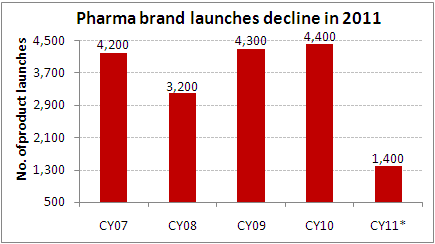

RBI asks banks to implement new rule from April 1, 2012
Mumbai, Nov. 16: Customers who receive payments through cheques/pay orders/drafts will henceforth have to present them to banks within three months if they want them credited to their account. At present, they enjoy a six-month period (from the date of the instrument) up to which they can present them to banks for payment.
A circular issued by the Reserve Bank of India has asked all banks to implement the new rule from April 1, 2012. It has asked banks to notify holders of such instruments of the change in practice by printing or stamping on the cheque leaves, drafts, pay orders and banker's cheques issued on or after April 1, 2012,
The change in policy has come about because some persons have been using these cheques/drafts/pay orders like cash and circulating them in the market for six months.
In public interest
The RBI, citing public interest, has thought it necessary to reduce the period from six months to three months.
It has asked banks not to make payment against the instruments if they are presented beyond the period of three months from the date of the instrument

Wednesday, November 16, 2011

Sugared beverages raise heart, diabetes risks for women
Source:the Hindu

Women who drank more than two sugar—sweetened drinks a day had increasing waist sizes. File Photo: K. Murali Kumar
Drinking two or more sugared beverages daily could not only bloat a woman’s waistline but also elevate the risk of heart disease and diabetes.
Researchers compared middle-aged and older women who drank two or more sugared beverages such as carbonated sodas or flavoured water with added sugar daily, to women who drank less.
Women in the first group were nearly four times as likely to develop high triglycerides, and were plausible to increase their waist sizes and develop impaired fasting glucose levels.
“Women who drank more than two sugar-sweetened drinks a day had increasing waist sizes, but weren’t necessarily gaining weight,” said Christina Shay, who led the study at the University of Oklahoma Health Sciences Centre.
“These women also developed high triglycerides, and women with normal blood glucose levels more frequently went from having a low risk to a high risk of developing diabetes over time,” added Shay, an Oklahoma statement said.
The Multi-Ethnic Study of Atherosclerosis (MESA) included food frequency surveys in 4,166 African-American, Caucasian, Chinese-Americans and Hispanic adults from 45 to 84 years old. According to the study, the participants did not have cardiovascular disease in the beginning.
These findings were presented at the American Heart Association’s Scientific Sessions this year.
Promoter holding may have fallen: Gati
Press Trust of India / Hyderabad November 15,
Gati Managing Director Mahendra Agarwal today indicated that some part of promoter-holding in the company may have reduced after its shares, majority of which have been pledged to lenders, witnessed a bloodbath on the bourses for the past three days.
BSE | NSE
Price
Click here to visit SME Buzz
Also Read
Related Stories
News Now
- CBI investigating alleged violation of telecom laws by SingTel
- Expected downgrade
- Mundra Port Q2 net up over 29% at Rs 273 cr
- GSK will pay $3 bn to settle US drug row
- BJP blames Sonia for corruption
- Retrogation in social development indices in Gujarat: Jairam Ramesh
Also Read
Related Stories
News Now
- Sensex ends down 270pts
- FII-TO-FII: Grasim Ind traded at 4% premium
- HDFC pips SBI to become most valued lender
- LinkedIn sets up technology centre in Bangalore
- Promoter holding may have fallen: Gati
More
Gati's promoters, led by Agarwal, have about 49.54% holding in the Rs 17.20 crore equity base of the company. However, about 90% of their holding was pledged by the promoters to meet the funding requirements for the Hydel power project in Sikkim.
"It is a fact that about 90% of our holding is pledged. When the (stock) prices have crashed so much, there will be some pressure and some selling of shares.
"We have not got any details but I am sure they (the lenders) must have done it (sold the shares). According to the agreement, whenever the prices fall they can sell," Agarwal said.
Gati's shares tumbled to an all-time low of Rs 28.85 on Monday against the weighted average of Rs 30.85, following some media reports that there is a concern among investors on whether the company would default on its FCCBs.
The scrip today closed at Rs 29.10, down 8.06% from its previous close on the BSE.
The downslide in the scrip has built margin pressures on the promoters and the pledgees too are selling off the stock in a hurry to minimise their losses.
Agarwal said the company's finances were not as bad as they were being portrayed. He said plans are afoot to demerge shipping division, which is dragging the financials down, into a separate subsidiary.
"We are also roping in a strategic partner for the express distribution business, the core activity of Gati, so that the company will be able to access global clients," he explained.
According to him, spinning off shipping division and roping in strategic partner for the express distribution business will be completed by June next year.
While Gati would hold a minority stake in the shipping business once it is hived off, it would continue to hold a majority stake in the parent company.
"Once the shipping business is hived off, we are hopeful of seeing a cash flow of Rs 20 crore every quarter and annualised cash flow would work out to Rs 100 crore," Agarwal said.
The company is also renewing the FCCBs with Goldman Sachs at a lower rate for $22 million.
"The fresh issuance of FCCBs will be for $22 million at Libor+ 500 basis points, which works out to about 5.5%. The existing FCCBs carry a rate of about 7.98%," he said.
Meanwhile, for the quarter ended September 2011, Gati reported a total income of Rs 236.32 crore and a net profit of Rs 3.83 crore.
Sikkim Manipal University signs MoU with Edinburgh Napier University, UK
New Delhi:15 NOV 2011: Sikkim Manipal University, one of the largest providers of higher education in East India, today announced the signing of a Memorandum of Understanding (MoU) with Edinburgh Napier University (ENU), a premier state-owned, government university in Edinburgh and one of UK’s largest universities.
Professor Joan K Stringer, principal & vice chancellor, Edinburgh Napier University and Somnath Mishra, vice chancellor, Sikkim Manipal University undertook the signing in the presence of Mike Russel, cabinet secretary, Education and Life Long Learning, Scotland.
The collaboration between these two universities aims to foster advancement in teaching, research, academic collaboration, cultural understanding and to create avenues for enhancing student experience. It will create a strong foundation to encourage exchange and sharing of academic, scientific and cultural experiences.
Under the scope of engagement, Sikkim Manipal University and Edinburg Napier University will collaborate for knowledge sharing and to foster advancement in teaching, research and academic collaboration. Both universities will undertake joint research in various fields and explore releasing academic publications on a regular basis.
This MoU will also foster co-operation and interaction between respective staff, including inter-institutional visits on occasions, staff development and staff training.
Earlier this year, ENU had signed a MoU with Sikkim Manipal University - Directorate of Distance Education to collaborate in the management education space. Under this understanding, SMU-DDE degree holders will be given the option to get an additional MBA degree from ENU by enrolling 60 out of 180 credits of the ENU MBA program.
These students will be given the option to pursue these additional credits by enrolling for a term on campus at ENU’s Craiglockhart campus in Edinburgh. This means, SMU-DDE students will avail a waiver on 2 term credits, thus saving time.
They get to save 2/3rd of the total fees required in pursuing a degree from ENU. The fees for the ENU program will be as per the prevailing fee at ENU. Students opting for a term at ENU’s Craiglockhart campus will have an added advantage of working part-time (20 hours per week with minimum wages of 20 £ per hour).
Post-Sikkim quake: Ham radio, bamboo apps for NE
November 15, 2011,
New Delhi: A meeting of India's top seismologists and earthquake specialists, which discussed issues arising from the Sikkim earthquake, has strongly recommended that northeastern states set up their own state disaster response units instead of being dependent on centralised forces like the National Disaster Response Force.
In addition, the national workshop on 'Housing, Resilience and Rehabilitation' on Nov 11-12 at Jamia Millia Islamia, which saw senior level representation from the governments of five states - Assam, Manipur, Meghalaya, Mizoram and Sikkim - suggested several innovative steps such as extensive use of ham radio operators and "community radio stations in every district" to respond to crisis where normal telecommunications are knocked out, including mobile phone networks.
The 'father' of earthquake engineering technology in the country, AS Arya, and others emphasized the critical need to develop quake resistant technology and use bamboo applications wherever possible. They said that most urban centres in the northeast faced major disasters in the event of a severe earthquake: retrofitting of existing buildings, especially "lifeline buildings such as schools and hospitals" was crucial.
"Retrofitting Clinics may be established in every district to develop cadre of trained masons, contractors and engineers and provide information and guidance on retrofitting to the community," the recommendations said.
While awareness was flagged as a key component of preparedness, the workshop recognised the urgent need for "short-term sensitisation programmes for elected representatives, community leaders and government officials."
For Sikkim, the workshop declared that the state government should consider setting up a separate "Department for Disaster Management under a designated officer no lower than a rank of a Secretary/Commissioner who will report directly to the SDMA (State Disaster management Authority". It also noted that the Regional Node for Disaster Risk Reduction in North East Space Applications Centre premises at Umiam, Meghalaya, should be the nodal agency with centres in each NE state with electronic and satellite connectivity.
In addition, the workshop flagged the need to involve communities in projects, programmes and policies. "Since public awareness is at the heart of preparedness, an intensive campaign must be waged from door to door and village to village, involving students and teachers and using the excellent network of Panchayats in Sikkim to sensitise communities and to enable them to meaningfully participate in the reconstruction process."
Other specialists called for campaigns using SMS' and new technology to sensitise and train people to how they could respond to earthquakes. Another suggestion made was for a "community based participatory monitoring system to track the progress, implementation of technical guidelines, grievance redressal" on the lines of existing processes in Gujarat, Tamil Nadu and Bihar.
Launched on Nov 11 by Jamia Vice Chancellor Najeeb Jung, the programme began with a minute's silence to honour the late Dr. Bhupen Hazarika and listened to his legendary song, "Buku hom hom kore".
The workshop was organized by Sanjoy Hazarika of Jamia's Centre for North East Studies under the auspices of its Sikkim Studies Programme with collaboration from the National Centre for Peoples Action and Disaster Preparedness in Ahmedabad of Rajendra and Rupal Desai.
Presentations were made by GC Khanal, joint director, Department of Land Revenue and Disaster Preparedness, Biswajit Sarma, head, Centre for Disaster Preparedness, Assam, TP Khaund, adviser to the Mizoram chief minister, PP Shrivastav, member, North Eastern Council, Suhel Akhtar, Manipur's principal secretary for disaster preparedness, and Pankaj Jain, government of Meghalaya as well as Jemino Mawthoh of the Department of Continuing Education at NEHU.
IANS
Tuesday, November 15, 2011
Satellite images show the river changed course
Indus re-enters India

Swati Bhan, Ahmedabad, Nov 14, DHNS:
The Indus or the Sindhu river, which was once synonymous with nurturing great civilisations in India, has now shifted its course and re-entered India feeding Nal Sarovar lake near Ahmedabad.
If the latest satellite images are to be believed, the development will benefit the Bhal region adjoining Ahmedabad district and the water-starved Kutch region.
Rohan Thakkar, a research student analysing the impact of climate change on water bodies of Gujarat, is the first to notice the phenomenon.
“We do have evidence that there were habitations in the Rann of Kutch and the Indus flowed in this area, but it majorly shifted its course westwards after the great earthquake in 1819," Thakkar said and attributed the siltation in the river basin to the change.
Thakkar has been working on this research project for the past three years. The project had demonstrated that the river was dying due to siltation.
According to Y T Jasrai, Thakkar’s guide and the coordinator of the programme, the ground truthing of the research is still to be done.
“The satellite images are definitely a reason to believe that the ancient river is changing its direction towards India, more specifically to Gujarat,” he said.
“The quality of the water in Nal Sarovar lake gives us a reason to come to a conclusion about the shifting of the river’s direction towards India which generally coincides with monsoon,” Jasrai said.
Water Resource Minister Nitin Patel said they have been informed about the satellite images.
“We have instructed our officials to carry out a research on this and find out the benefits that will come with it. Once the research is completed by the department, ground truthing of water, especially at these two places, will be conducted,” said Patel.
Dr Y S Ravat, Director of the Archaeology Department, is of the opinion that a change of the course of rivers is possible and it has happened in the past also. He pointed out that there is a rise in rainfall in Gujarat in the recent years. If the present trend continues, there could be further tectonic movements which will change the course of the river.
In the past after the 1819 quake, the Allahbund came up in the northwest of Bhuj as a natural bund and stopped the flow of water into the Great Rann of Kutch, resulting in the gradual dry up of the area. The river also changed its course, he added.
Source:The Deccan herald
Indus re-enters India
Swati Bhan, Ahmedabad, Nov 14, DHNS:
The Indus or the Sindhu river, which was once synonymous with nurturing great civilisations in India, has now shifted its course and re-entered India feeding Nal Sarovar lake near Ahmedabad.
If the latest satellite images are to be believed, the development will benefit the Bhal region adjoining Ahmedabad district and the water-starved Kutch region.
Rohan Thakkar, a research student analysing the impact of climate change on water bodies of Gujarat, is the first to notice the phenomenon.
“We do have evidence that there were habitations in the Rann of Kutch and the Indus flowed in this area, but it majorly shifted its course westwards after the great earthquake in 1819," Thakkar said and attributed the siltation in the river basin to the change.
Thakkar has been working on this research project for the past three years. The project had demonstrated that the river was dying due to siltation.
According to Y T Jasrai, Thakkar’s guide and the coordinator of the programme, the ground truthing of the research is still to be done.
“The satellite images are definitely a reason to believe that the ancient river is changing its direction towards India, more specifically to Gujarat,” he said.
“The quality of the water in Nal Sarovar lake gives us a reason to come to a conclusion about the shifting of the river’s direction towards India which generally coincides with monsoon,” Jasrai said.
Water Resource Minister Nitin Patel said they have been informed about the satellite images.
“We have instructed our officials to carry out a research on this and find out the benefits that will come with it. Once the research is completed by the department, ground truthing of water, especially at these two places, will be conducted,” said Patel.
Dr Y S Ravat, Director of the Archaeology Department, is of the opinion that a change of the course of rivers is possible and it has happened in the past also. He pointed out that there is a rise in rainfall in Gujarat in the recent years. If the present trend continues, there could be further tectonic movements which will change the course of the river.
In the past after the 1819 quake, the Allahbund came up in the northwest of Bhuj as a natural bund and stopped the flow of water into the Great Rann of Kutch, resulting in the gradual dry up of the area. The river also changed its course, he added.
Source:The Deccan herald

What are the world's biggest sources of renewable energy and where are they located?

source:the economist
EFFORTS to tackle climate change include heavy investment in renewable sources of electricity around the world. Solar power saw the biggest leap in 2010, with the installed base jumping 70% compared with 2009 to 40 gigawatts. Wind power also grew strongly, adding 24% of generating capacity. Yet the biggest source of renewable electricity, hydropower, and the smallest, geothermal, both only added 3% to capacity. Finding usable sources of either is becoming increasingly hard or costly. The region that saw the biggest growth in renewable energy projects was power-hungry Asia. Investment in renewables also saw the biggest leap since 2007, with $243 billion spent, a 30% increase over 2009.
source:the economist


 source:Livemint


Subscribe to:
Posts (Atom)